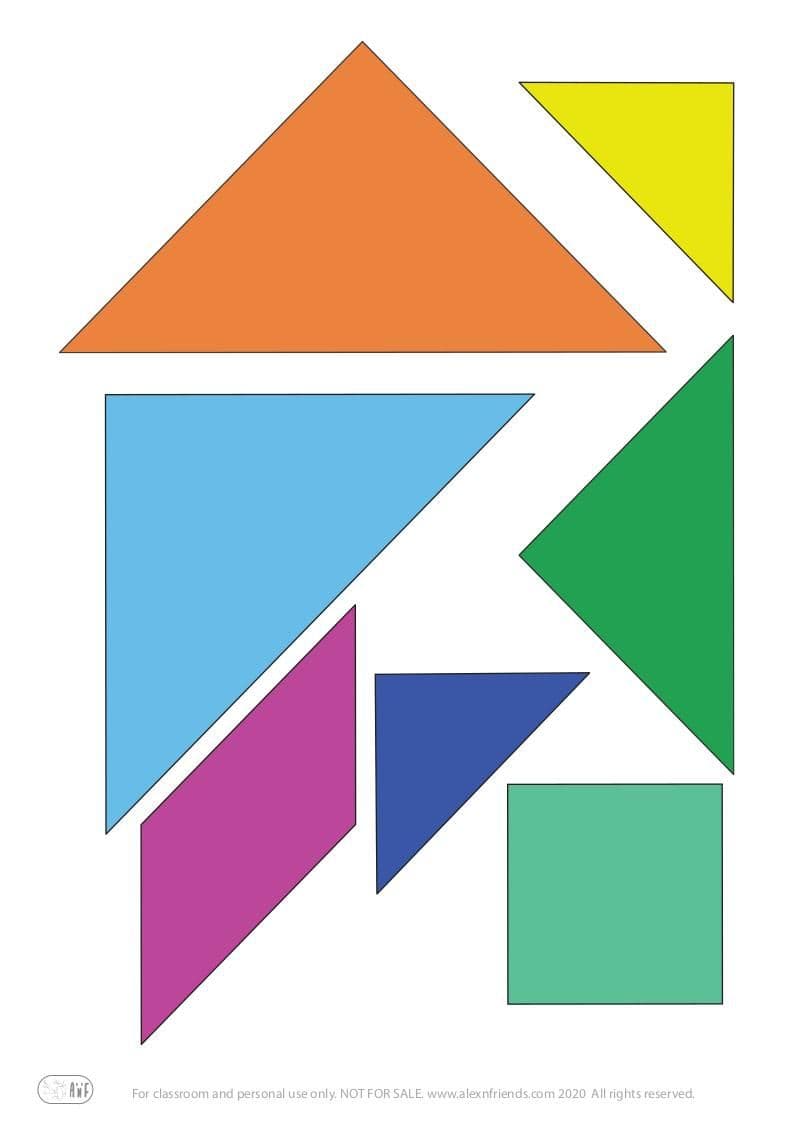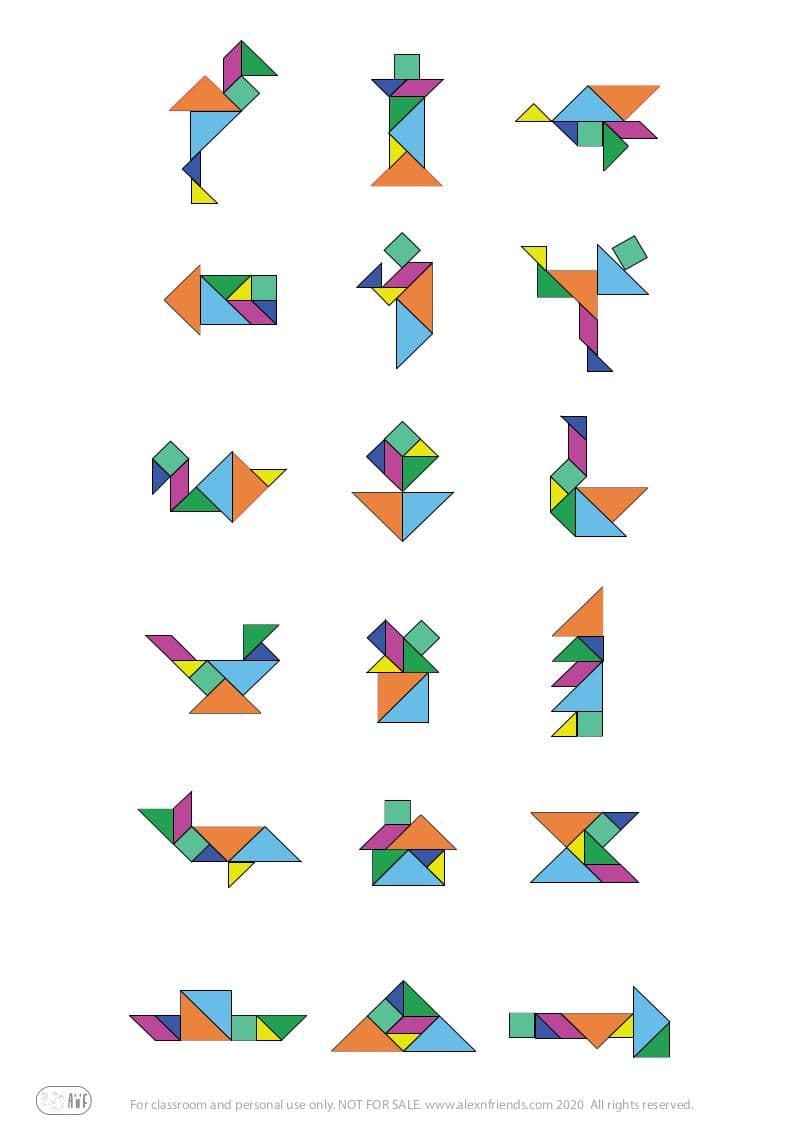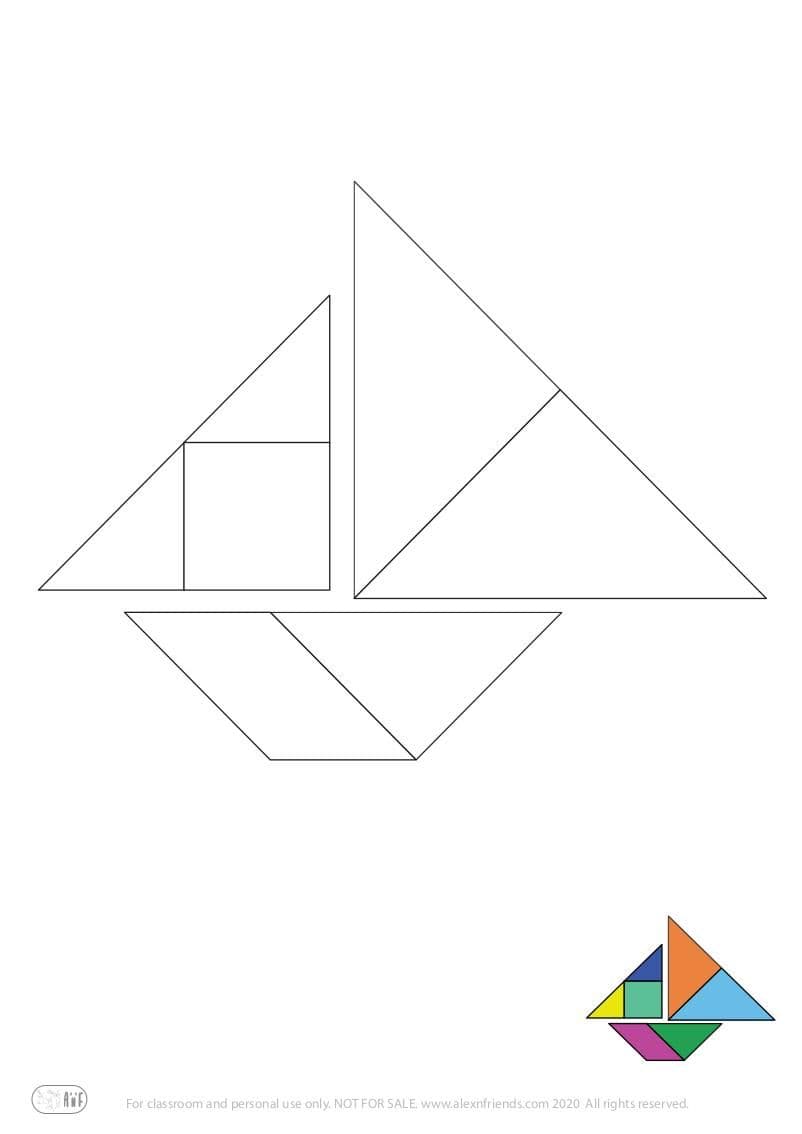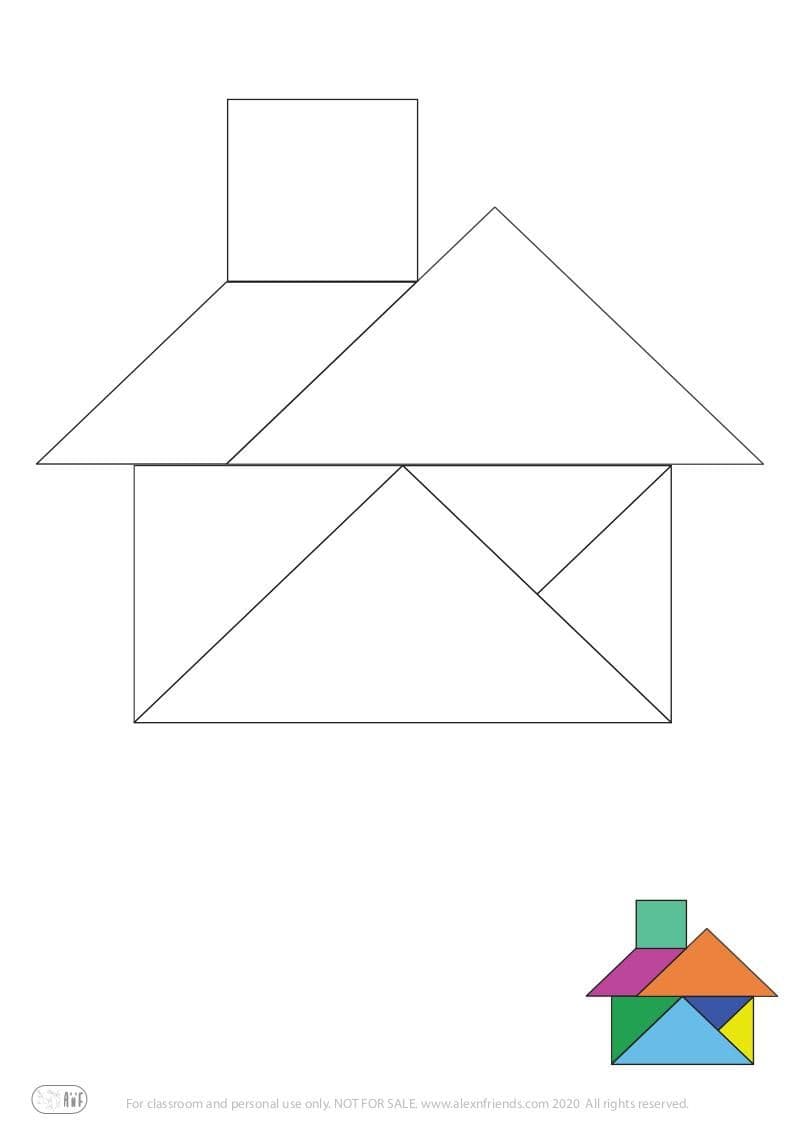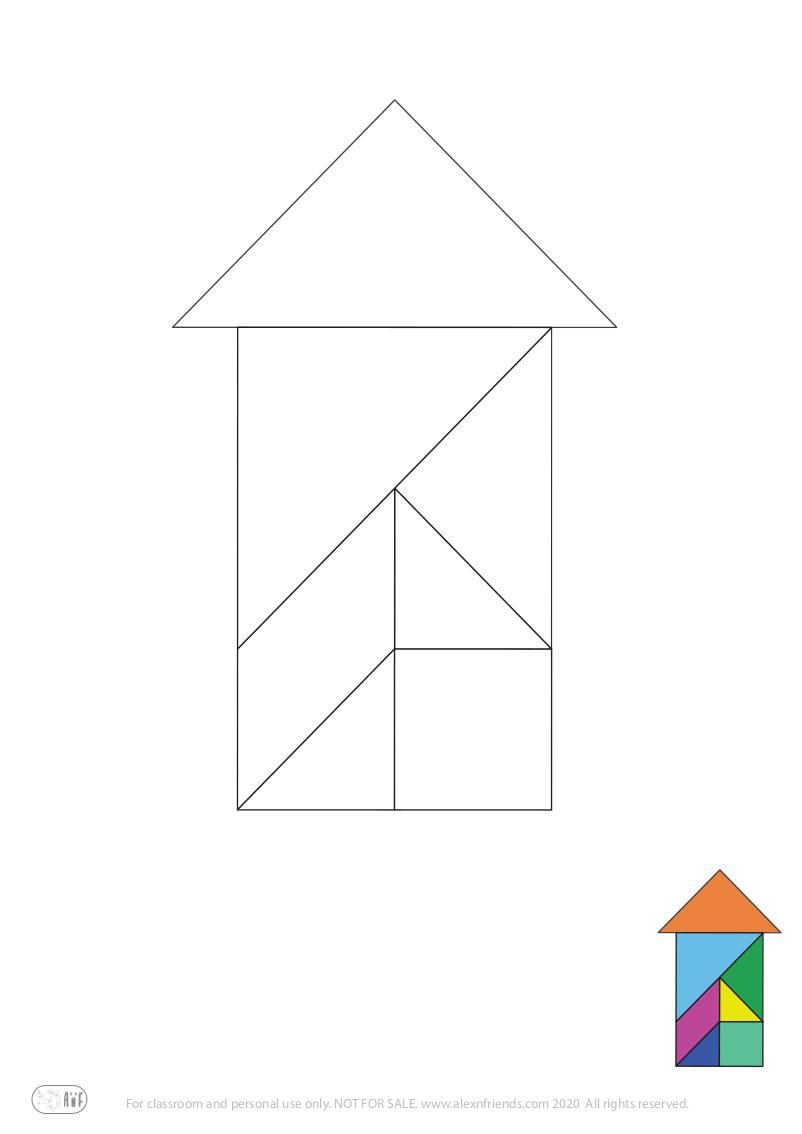
Seven pieces — endless possibilities! Tangram is one of the cleverest and most timeless educational games in the world. A brilliant set of seven geometric shapes — two small triangles, one medium triangle, two large triangles, one square, and one parallelogram — and with them you can make anything: animals, people, houses, boats, and whatever else a child can imagine!
What You'll Need
- Printable tangram template (below)
- Scissors to cut out the pieces
- Markers or coloured pencils to colour them in
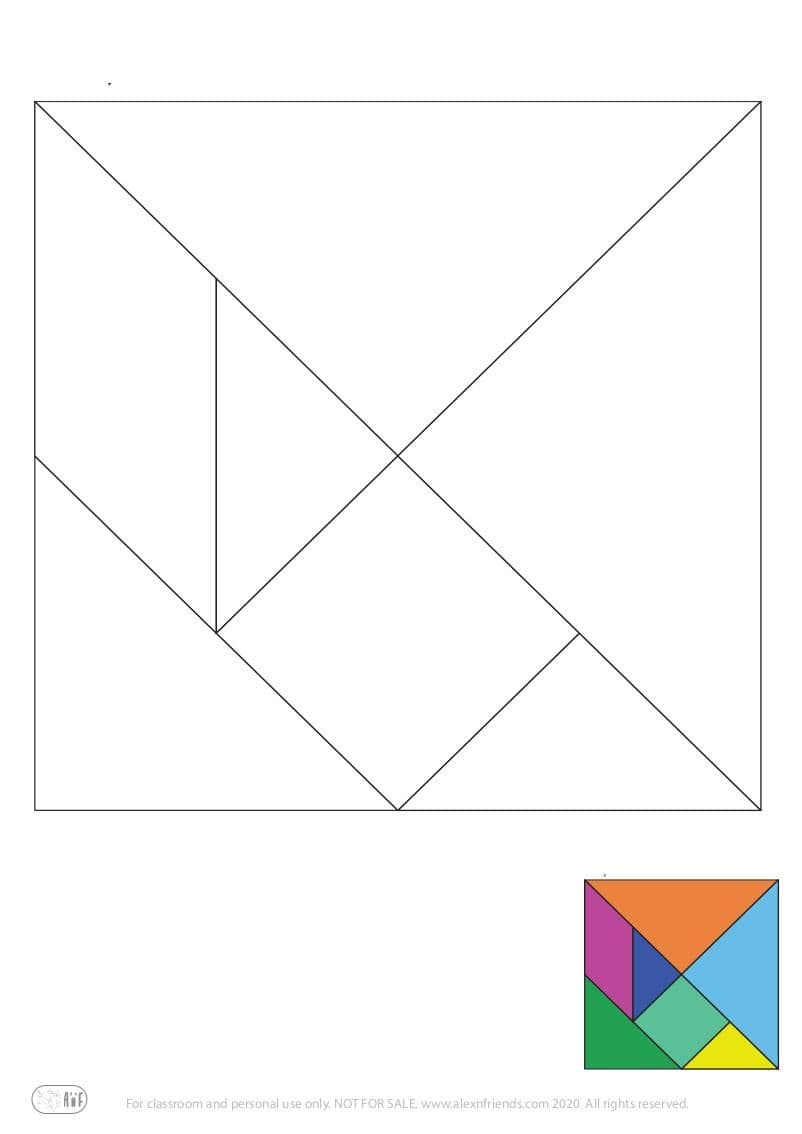
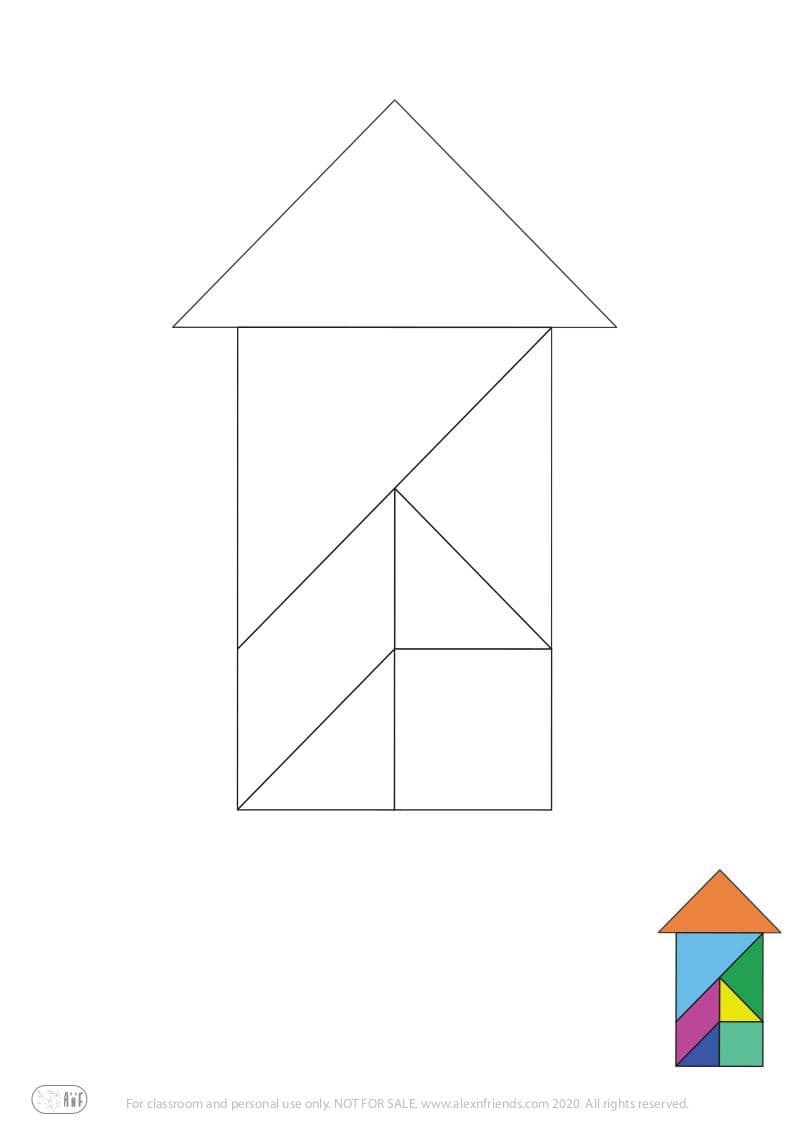
- Colouring sheets with outlines (below) for a first introduction
How to Play
Version 1 — Free creation: The simplest approach is to let children create their own shapes and pictures without any restrictions. What can they make with the seven pieces? Let their imagination lead the way!
Version 2 — Traditional puzzle: Show the child a shape in outline form, so that the "borders" between the individual pieces are hidden. The child then tries to recreate the shape using all seven pieces. A wonderfully engaging challenge!
Version 3 — Colouring sheets: For a simpler first introduction to tangram, print the colouring sheets with the shape outlines and let children colour them in freely.
Step 1 — Print and cut: Print the template and cut out the seven geometric shapes. You can leave them plain or colour them in your chosen colours before cutting!
Step 2 — Get to know the shapes: Before starting the puzzle, talk to the child about the shapes — "this is a triangle, this is a square, this is a parallelogram." A first introduction to geometry!
Step 3 — Create! Follow the suggestions to form the pictures, or let the children create their own by joining the pieces however they like.
Benefits for Children
Geometric thinking: Children learn about geometric shapes and their properties through hands-on exploration — triangles, squares, and parallelograms become familiar and understandable.
Spatial awareness: Like building blocks, tangram teaches children about space — how shapes fit together, how they rotate, and how they combine to make something new.
Problem-solving: Every outline is a problem for the child to solve — developing systematic thinking, patience, and perseverance.
Creativity and imagination: In the free creation version, tangram becomes an unlimited artistic medium — from seven simple pieces come endless creations.
Visual-motor coordination: The precise placement of pieces exercises the fingers and hand-eye coordination — excellent preparation for writing.
Mathematical thinking: Tangram introduces concepts such as symmetry, fractions, and spatial capacity in a completely natural and playful way.