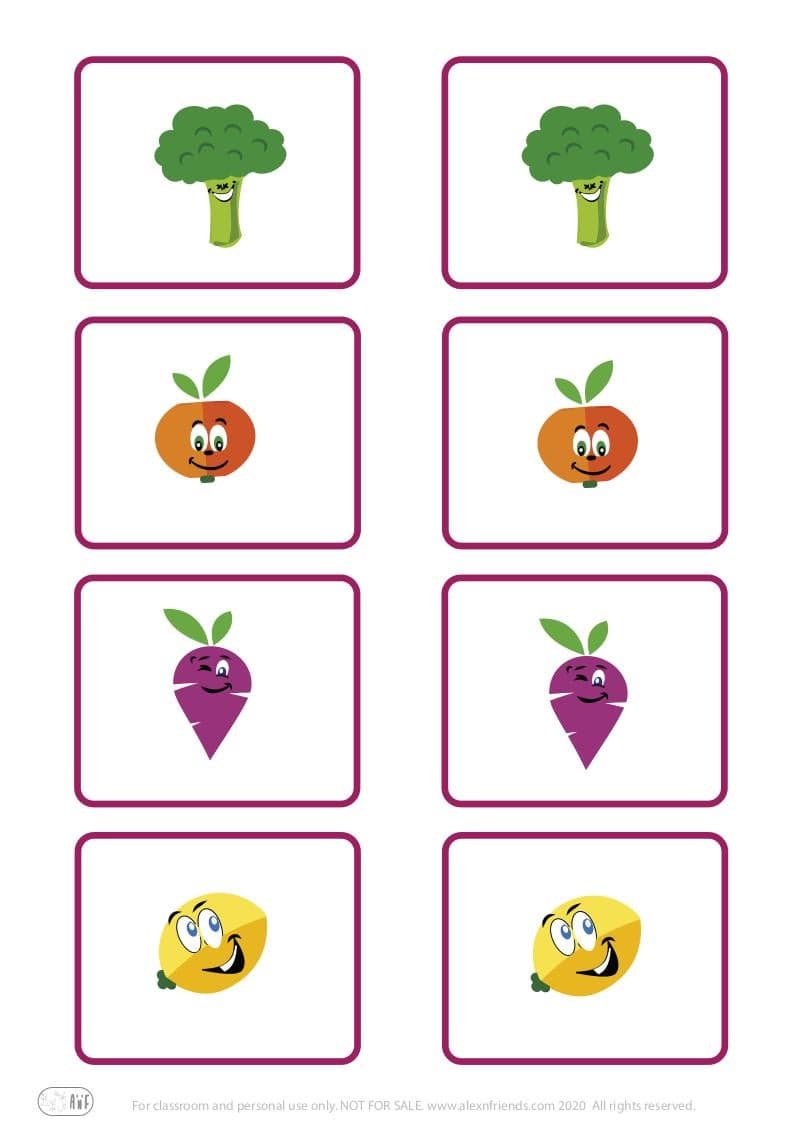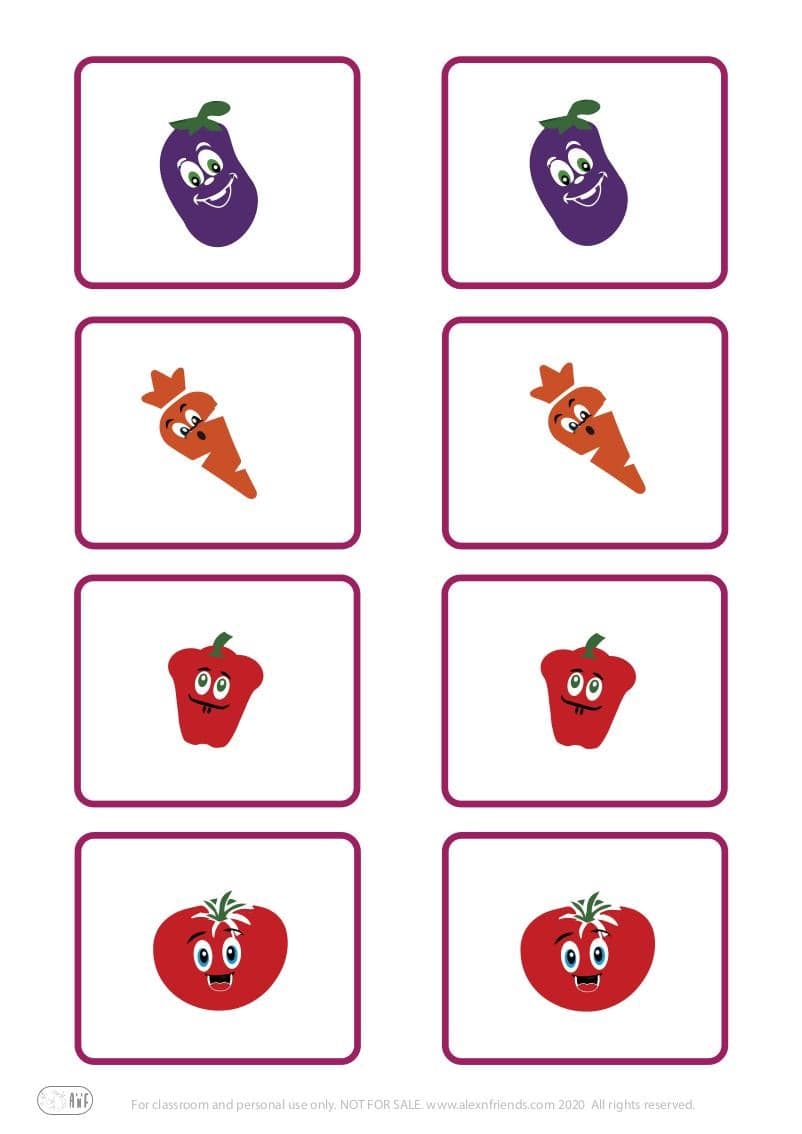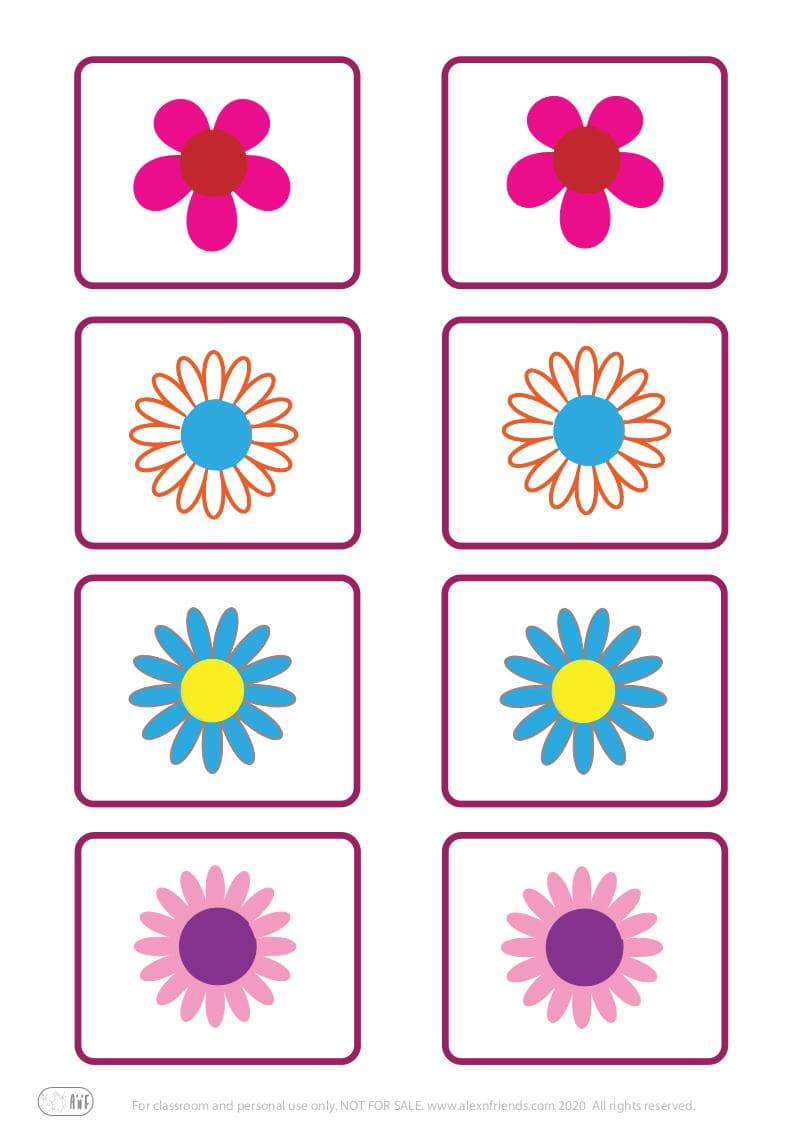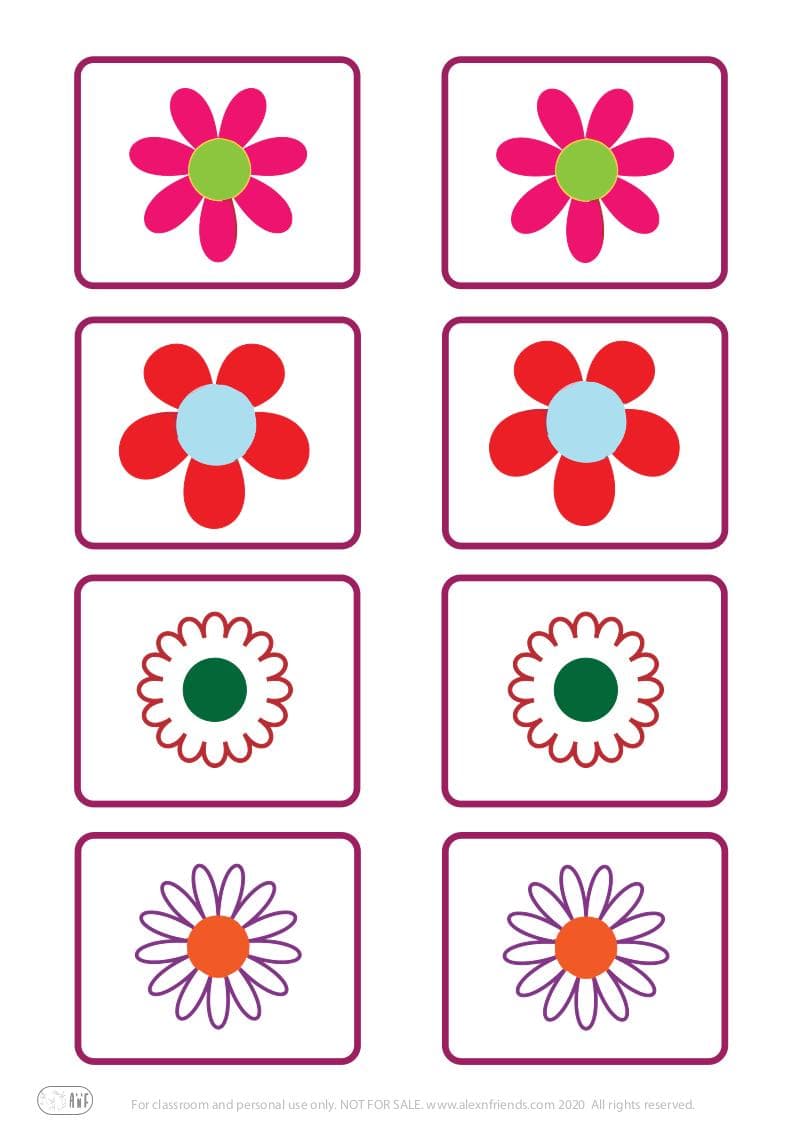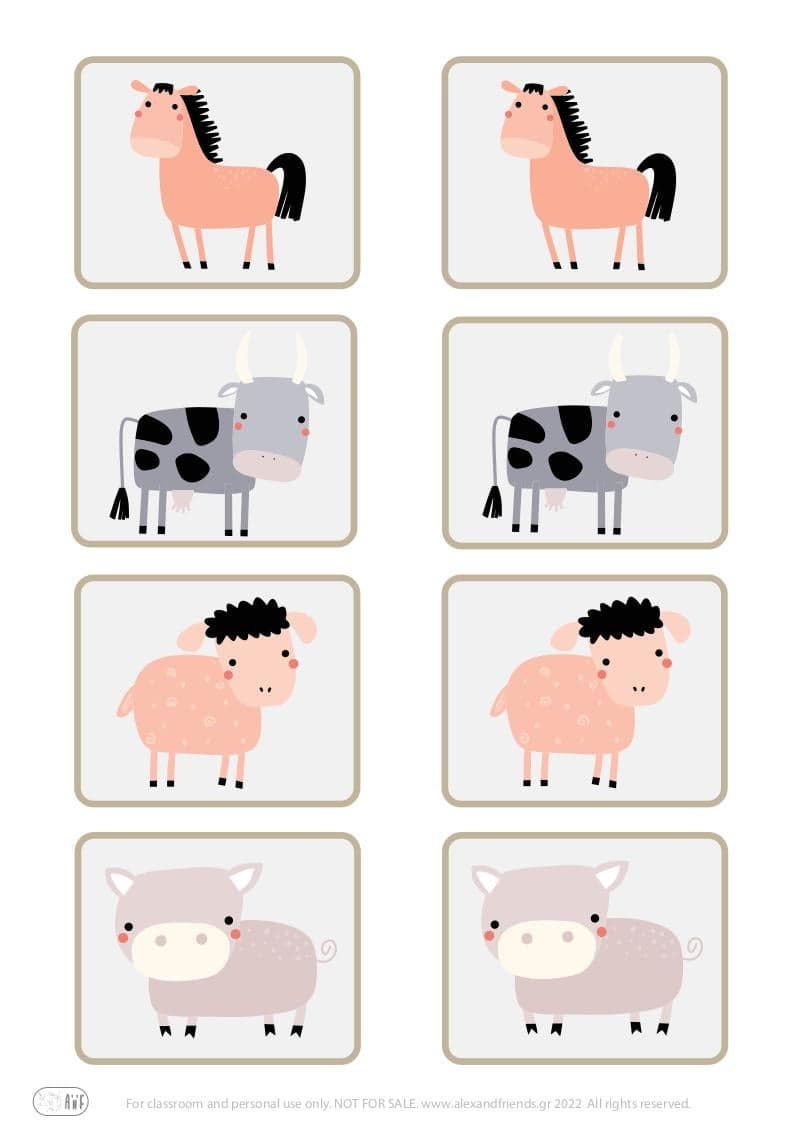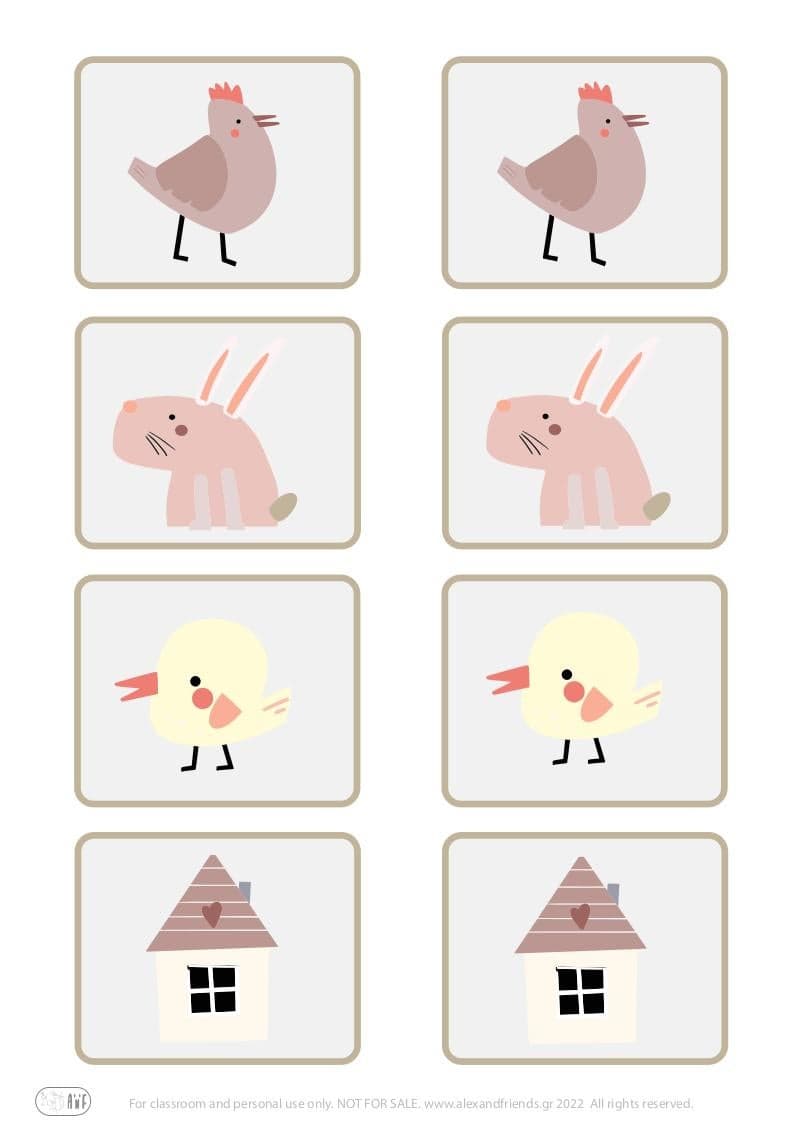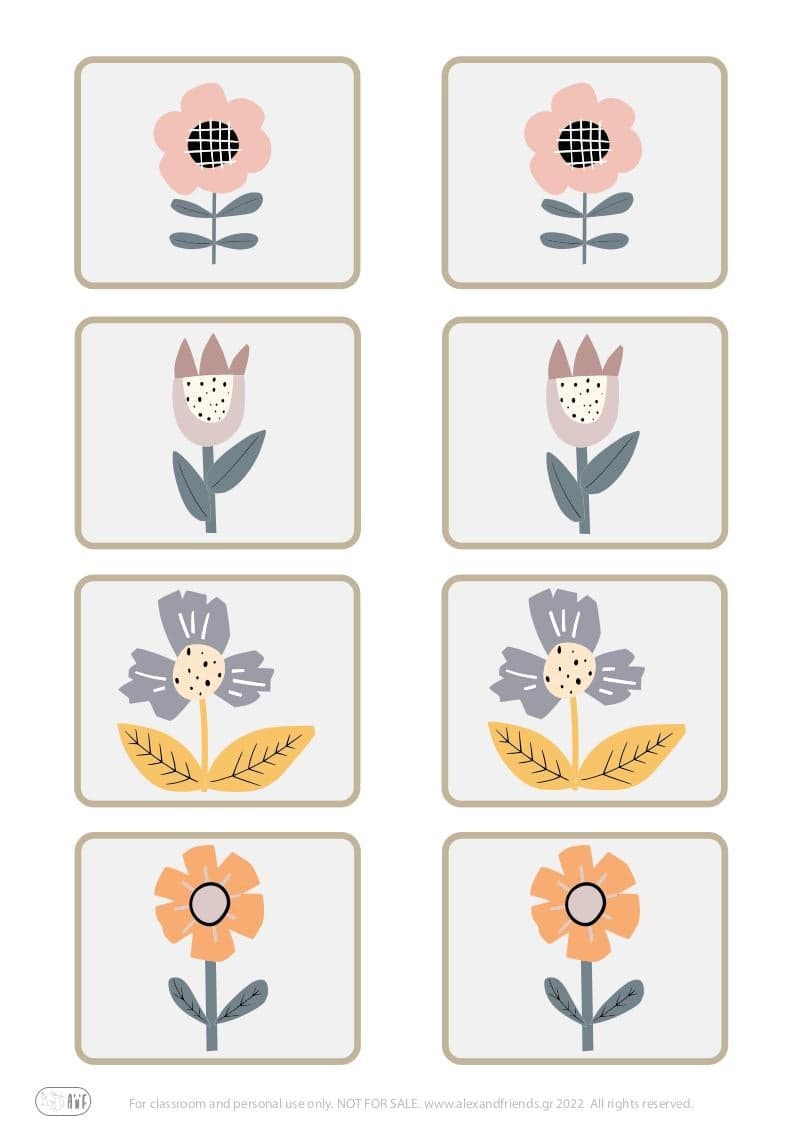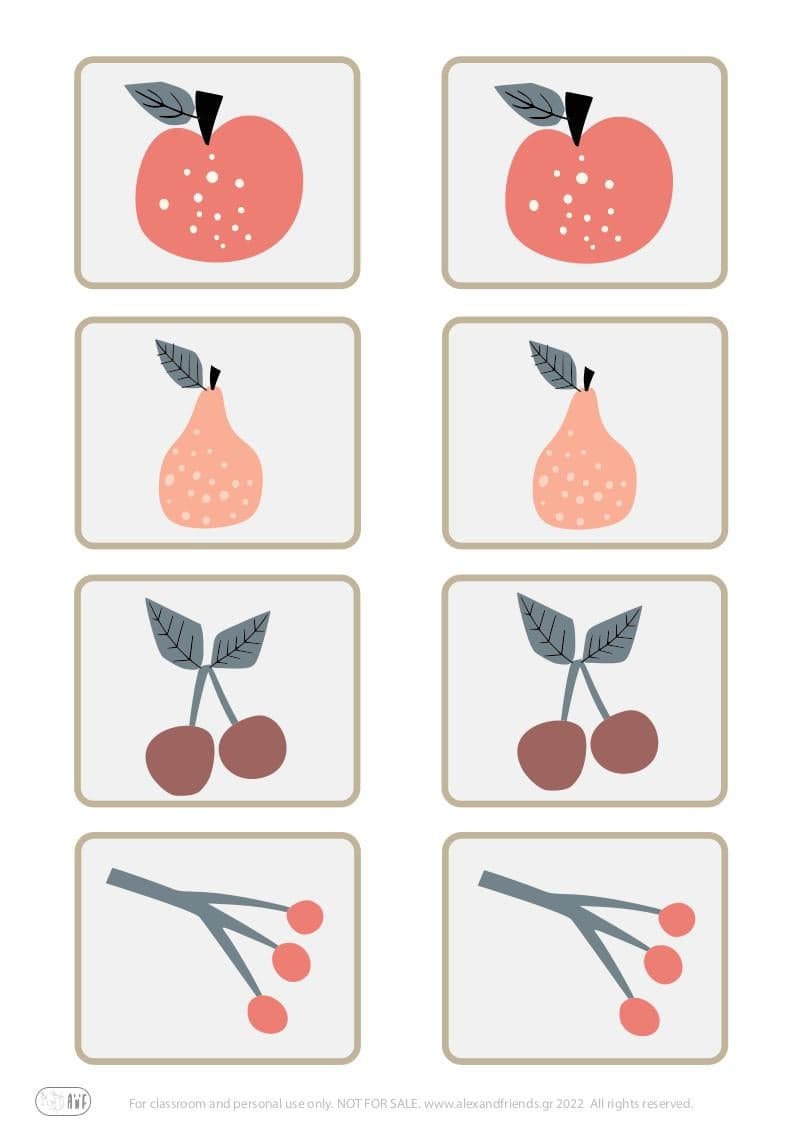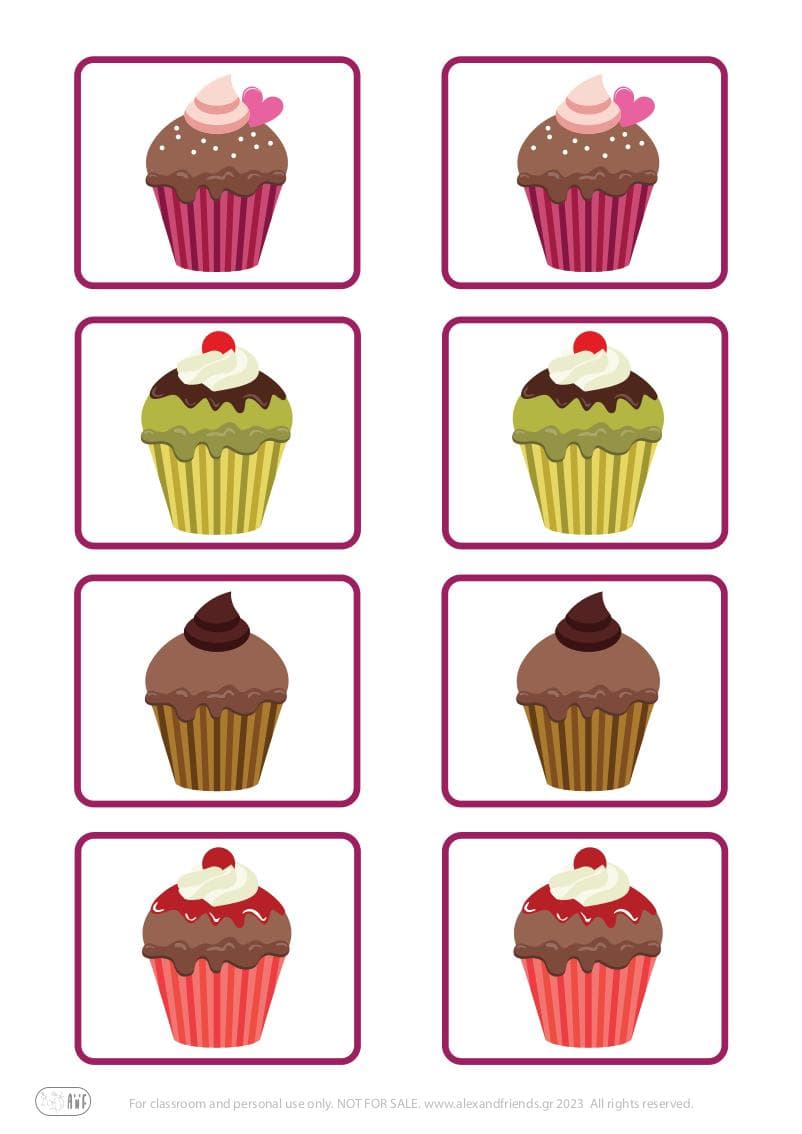
Find the pair! This timeless game is so much more than simple fun — it is a complete workout for little minds! Concentration, memory, observation, and patience all in one game that can be played anywhere, anytime, and by children of all ages.
What You'll Need
- Matching cards (below) — printable and ready to use
- Scissors to cut them out
- Optional: lamination or clear tape covering for greater durability
- Optional: a small box or bag for storage
How to Play
Version 1 — Classic memory: Spread all the cards face down on the table. The player turns over two cards — if they match, they keep them and play again! If they don't match, they turn them face down and it's the next player's turn.
Version 2 — Open matching: For very young children, spread the cards face up and ask them to find the pairs. An easier version that focuses on observation skills.
Version 3 — Category matching: Use cards pairing animal + home, animal + food, number + quantity — enrich the game with educational concepts!
Benefits for Children
Memory and concentration: The matching game is one of the most effective tools for developing short-term memory — the child must remember where they saw a picture while also following the other player's moves!
Observation skills: To recognise a match, the child must carefully observe details — colour, shape, pattern. The capacity for fine discrimination is developed.
Logical thinking: Children quickly begin to develop strategy — "if I turn this one and that one..." — an introduction to strategic thinking and planning.
Sorting and categorisation: With themed cards, children learn to group objects by category — a core cognitive skill for mathematics and the natural sciences.
Social skills: Taking turns, waiting, accepting the result, and encouraging the other player are all naturally practised every round — invaluable skills for school life.
Confidence: Every pair the child finds is a small victory — and small achievements build great confidence!
Ideas for Variations Create themed card sets: seasons, animals and their homes, numbers and quantities, letters and words for older children! Gradually increase the number of cards for a greater challenge. Play solo — how quickly can the child find all the pairs on their own?