Why do we wear a coat in winter? Where do the birds go in autumn? Why do flowers bloom in spring? The seasons are among the first great "whys" that children ask — and this activity gives them the answers in the most enjoyable way! Through pictures, games, and hands-on exploration, children discover the cycle of nature and their place within it.
What You'll Need
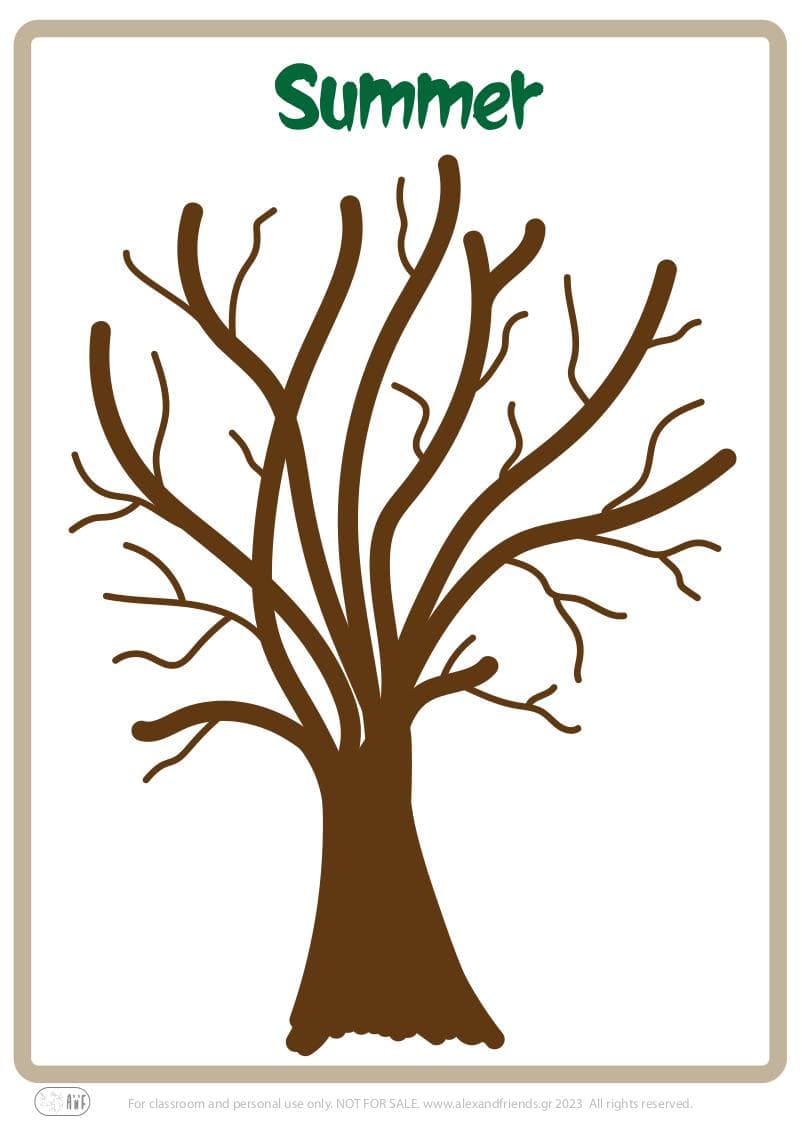
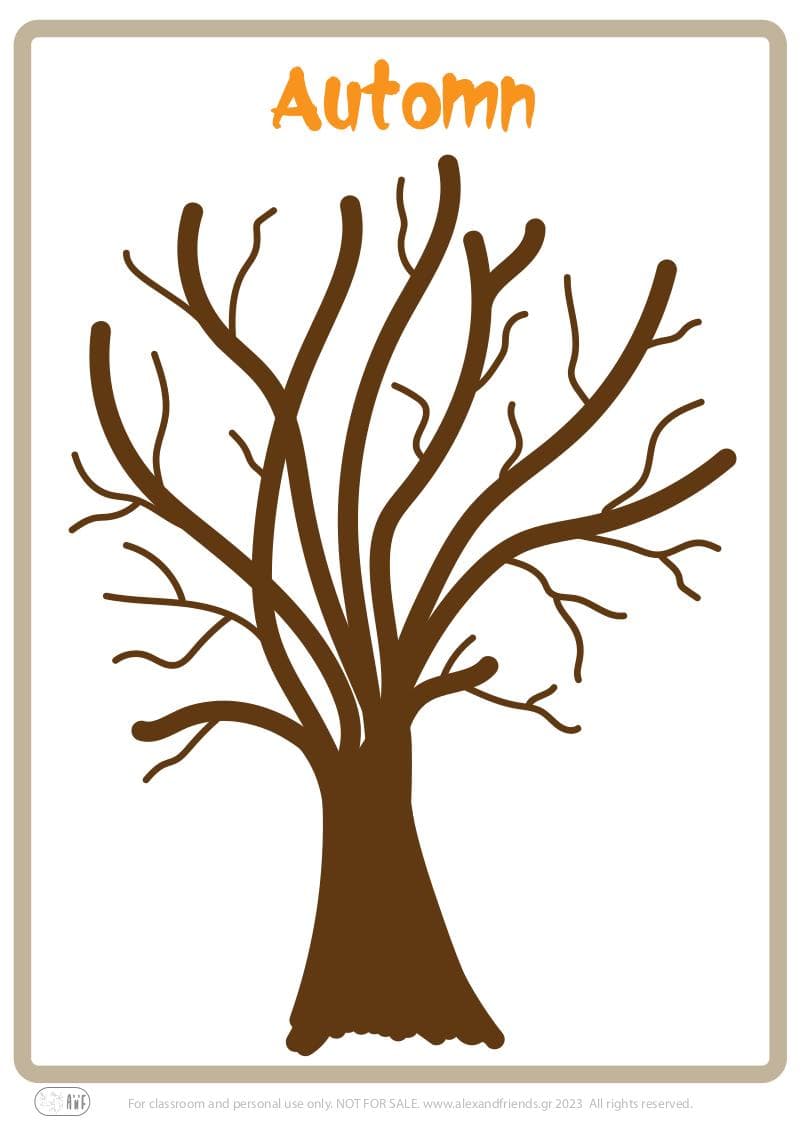
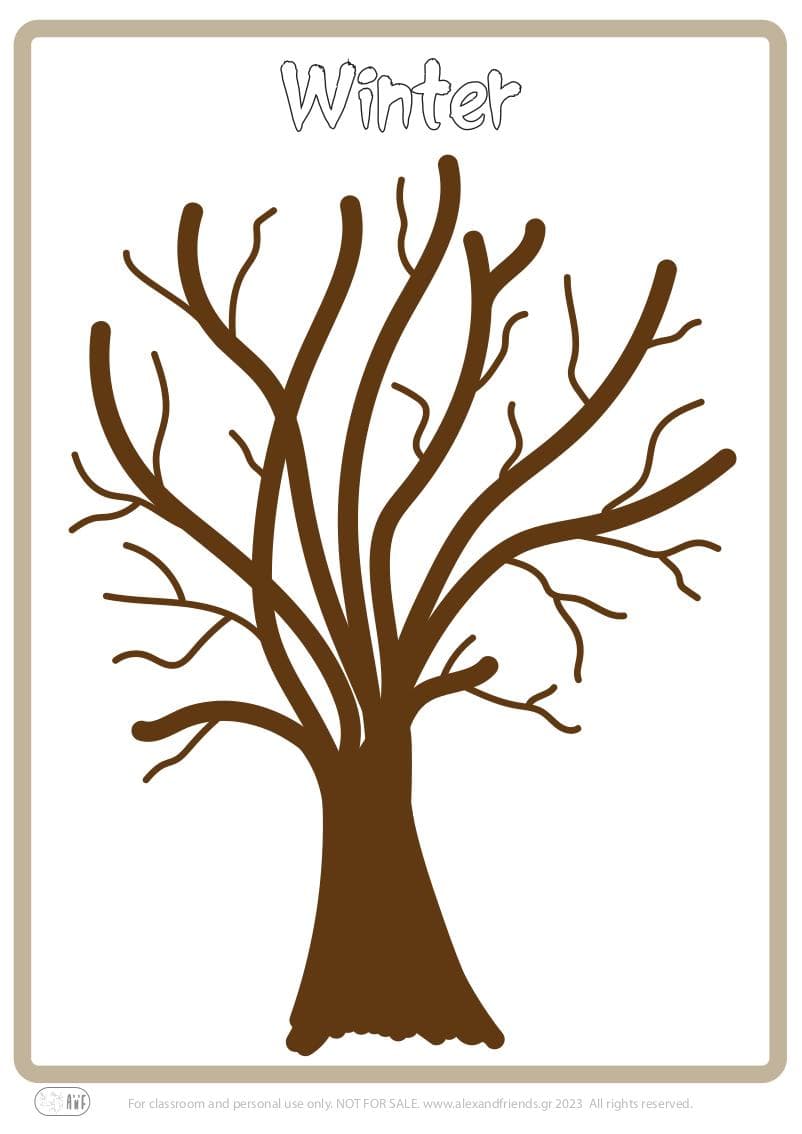
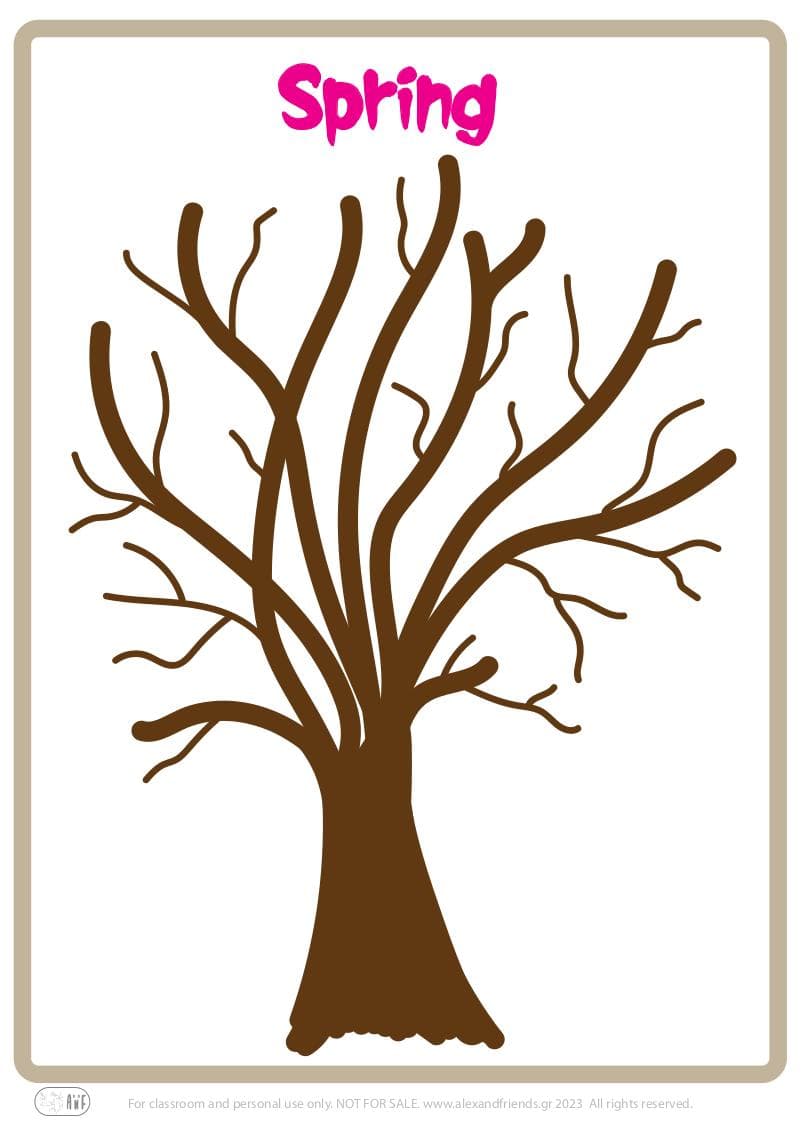
- Season cards / trees (below) — printable and ready to use
- Cotton buds
- Tempera paints in red, yellow, green, etc.
How to Play
Activity 1 — Season sorting: Spread out the tree cards and ask the child to choose a season.
Activity 2 — The Seasons Tree: The child sticks on or paints with a cotton bud dipped in liquid paint the appropriate elements in each section: blossom for spring, green leaves for summer, orange leaves for autumn, snow for winter.
Spring. During spring, trees begin to grow again and sprout. New leaves and blossoms fill their branches!
Summer. Trees continue to grow in summer. Most plants produce green leaves.
Autumn. Trees stop growing during autumn. Their leaves fall or change colour to brown, yellow, or red.
Winter. Winter is the coldest season. Many trees have shed all their leaves.
Activity 3 — "What season is it now?": Every morning ask the child: "What season is it today? What's the weather like? What clothes are we wearing?" A simple daily habit that builds an awareness of time.
Activity 4 — Nature exploration: Collect materials from each season — blossoming branches in spring, pebbles in summer, red leaves in autumn, frozen droplets in winter. Make a season box!
Benefits for Children
Awareness of time: Understanding that time moves in seasonal cycles is the first sense of time children develop — a foundation for understanding days, months, and years.
Natural sciences: Children learn about nature's cycles, animal migration, plant growth, and weather phenomena — early scientific thinking through observation.
Sorting and categorisation: Matching pictures to seasons develops logical thinking and the ability to group by shared characteristics.
Language development: The rich vocabulary of the seasons — blossoming, frozen, cloudy, lush — significantly enriches spoken language.
Connection with the natural world: Children who understand the seasons develop empathy for nature and animals — a foundation for environmental awareness.
Self-care: Knowing the seasons helps children understand why they wear different clothes and eat different fruits — connecting knowledge to everyday life!
Ideas for Variations Make seasonal collages with natural materials! Play "season bingo" with the cards. Combine with books or songs about seasons. Create a seasons diary — each month the child adds things they notice around them!