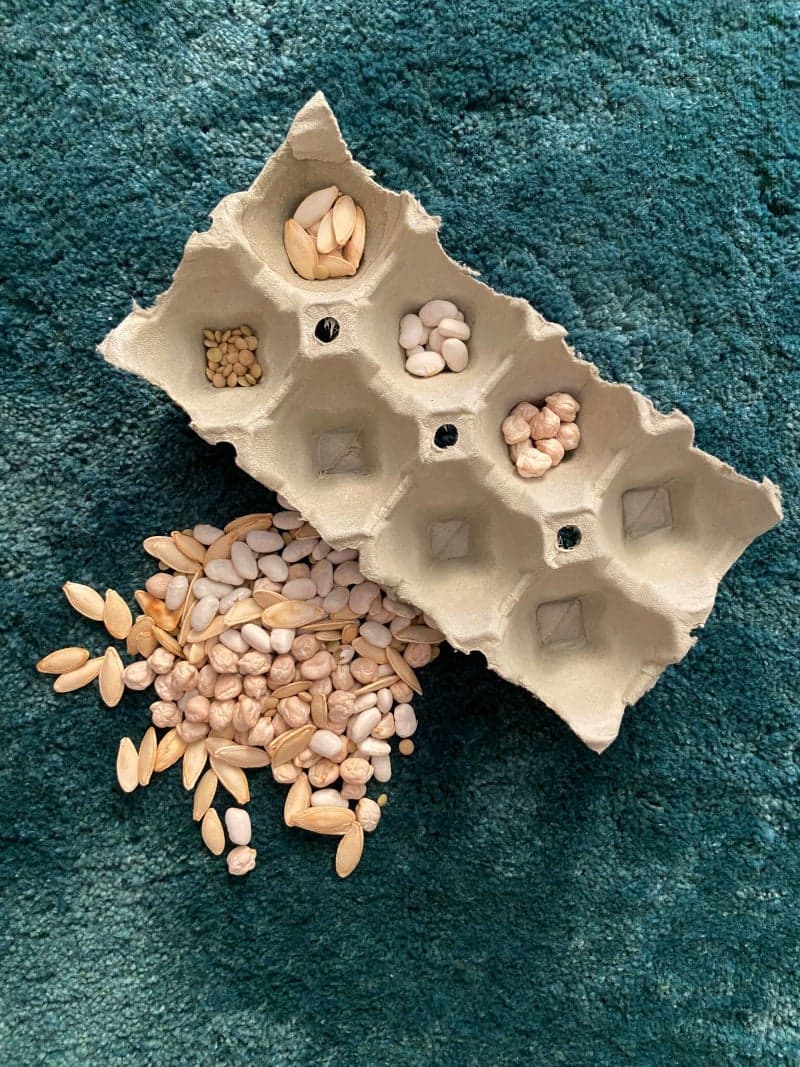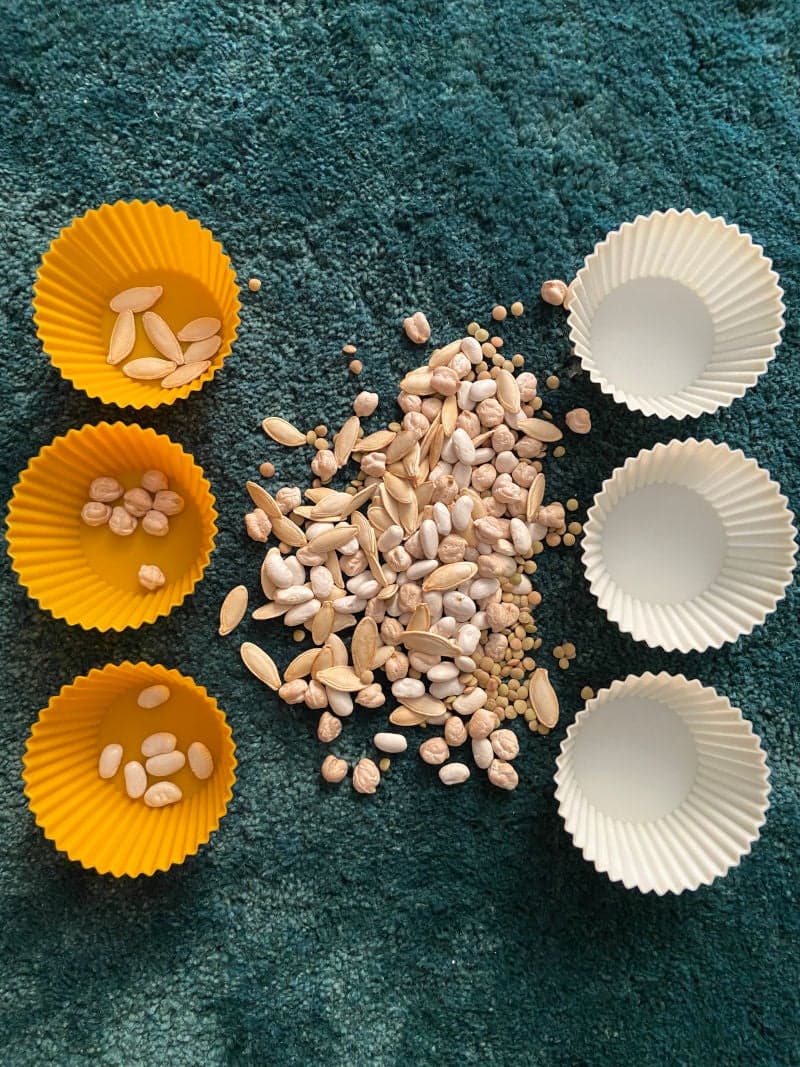
Reds together, blues together — and the yellows go here! Sorting is the first great mathematical skill children develop — and it is learned best not with pencil and paper, but with their own hands, through play! This activity turns simple everyday objects into a rich educational game that children will ask to play again and again.
What You'll Need
- Objects for sorting — choose one or more of the following:
- Buttons in various colours, sizes, and shapes
- Coloured beads or plastic toy animals
- Pasta in different shapes (penne, rigatoni, fusilli)
- Leaves, pebbles, or pine cones from nature
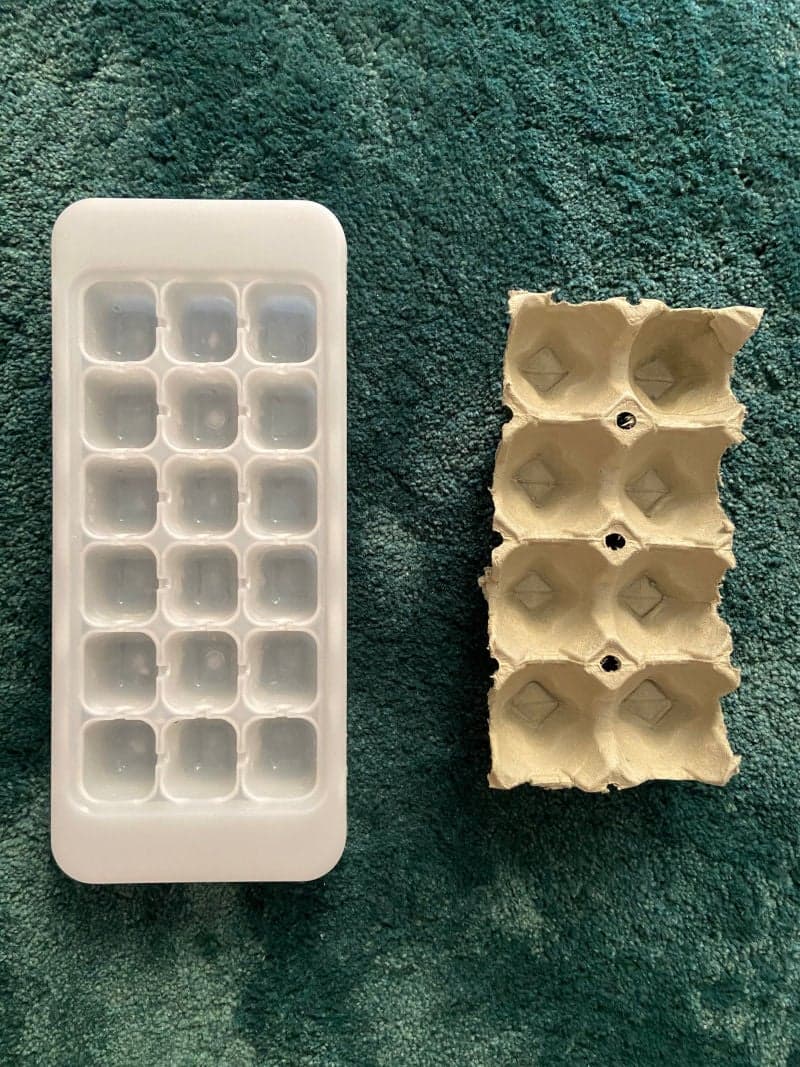
- Containers, trays, or paper plates for the categories
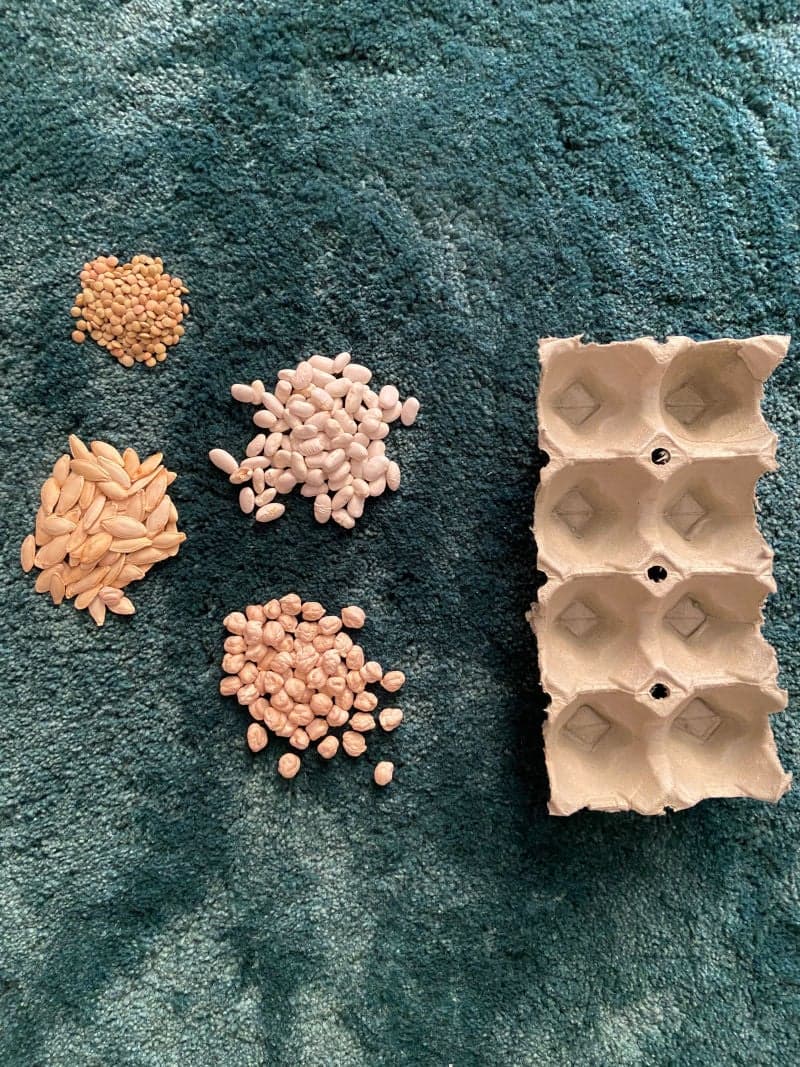
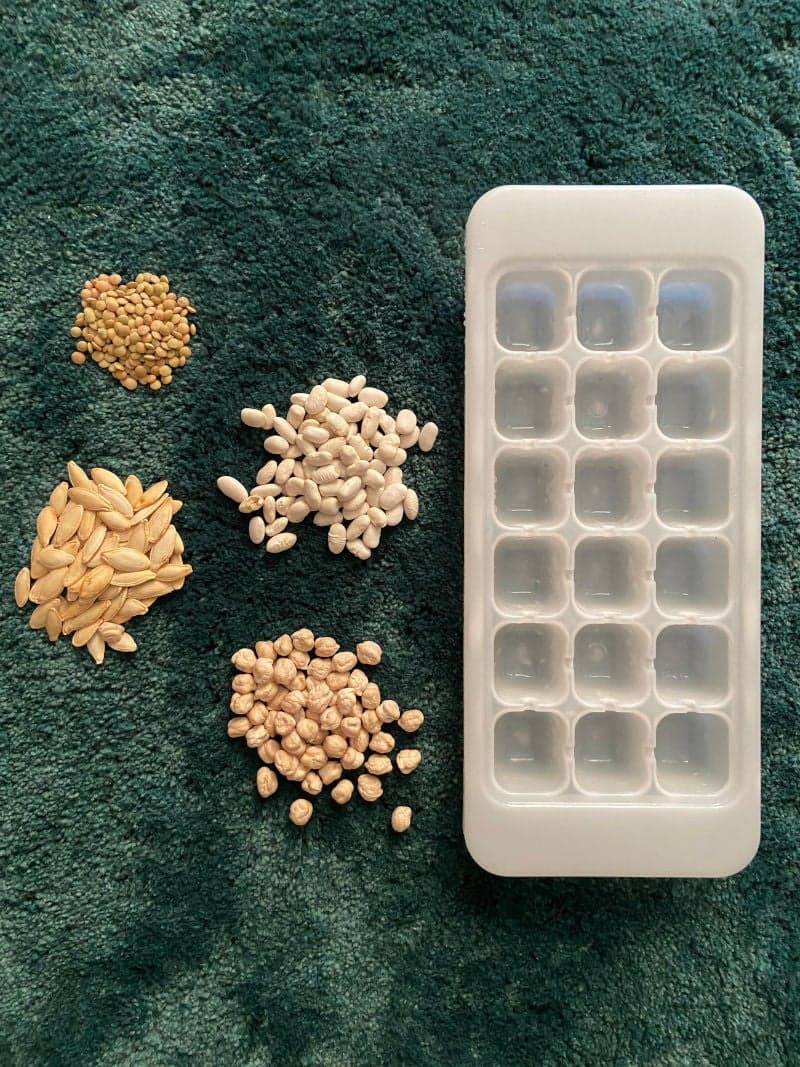
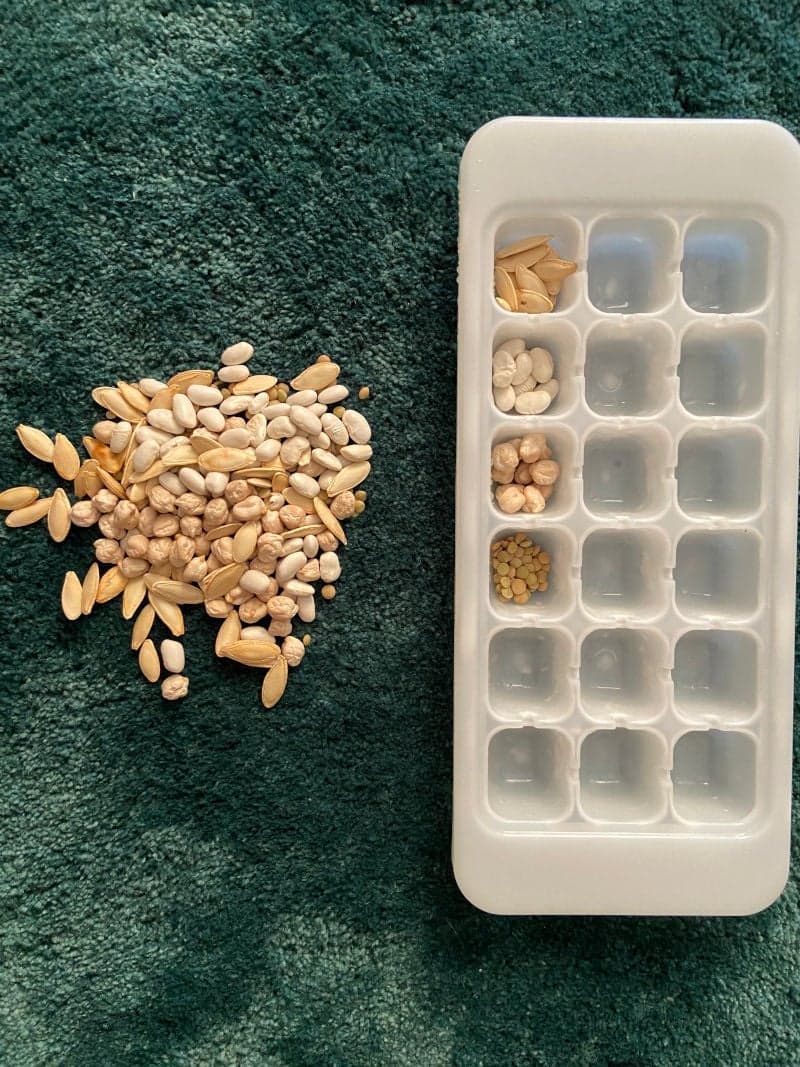
- Pulses! Lentils, beans, chickpeas — just like in the photos!
How to Play
Level 1 — Sort by colour: Mix up the objects and ask the child to separate them by colour. Simple, immediate, and excellent for very young children!
Level 2 — Sort by size or shape: Once colour is mastered, move on to size ("put the big ones here, the small ones there") or shape.
Level 3 — Count: Once sorted, count together: "How many beans did we find? How many chickpeas? Which group has more?"
Level 4 — Double sorting: For older children: "Put the big beans here and the small beans there" — an introduction to the logic of sets!
Benefits for Children
Early mathematical thinking: Sorting and counting are the two foundations of mathematics — they develop naturally through hands-on play long before the child learns to write numbers.
Logic and categorisation: The child learns to group objects by shared characteristics — a core cognitive process that supports later understanding in science, mathematics, and language.
Observation and discrimination: To sort correctly, the child must observe and compare — developing the capacity for fine discrimination of colours, shapes, and sizes.
Fine motor skills: Picking up and placing small objects gives the fingers an intensive workout — ideal preparation for writing.
Language development: Talking during the activity ("this is big/small, red/blue, same/different") enriches vocabulary with mathematical and descriptive words.
Concentration and patience: Completing the sorting requires focused attention and a methodical approach — excellent self-regulation practice.
Ideas for Variations Play with natural materials: sort leaves by colour, pebbles by size, pine cones by shape — connect the activity to nature and the seasons! Introduce simple graphs: after sorting, draw a simple bar chart together. Use food — sort pasta, pulses, or seeds for tangible, hands-on learning!