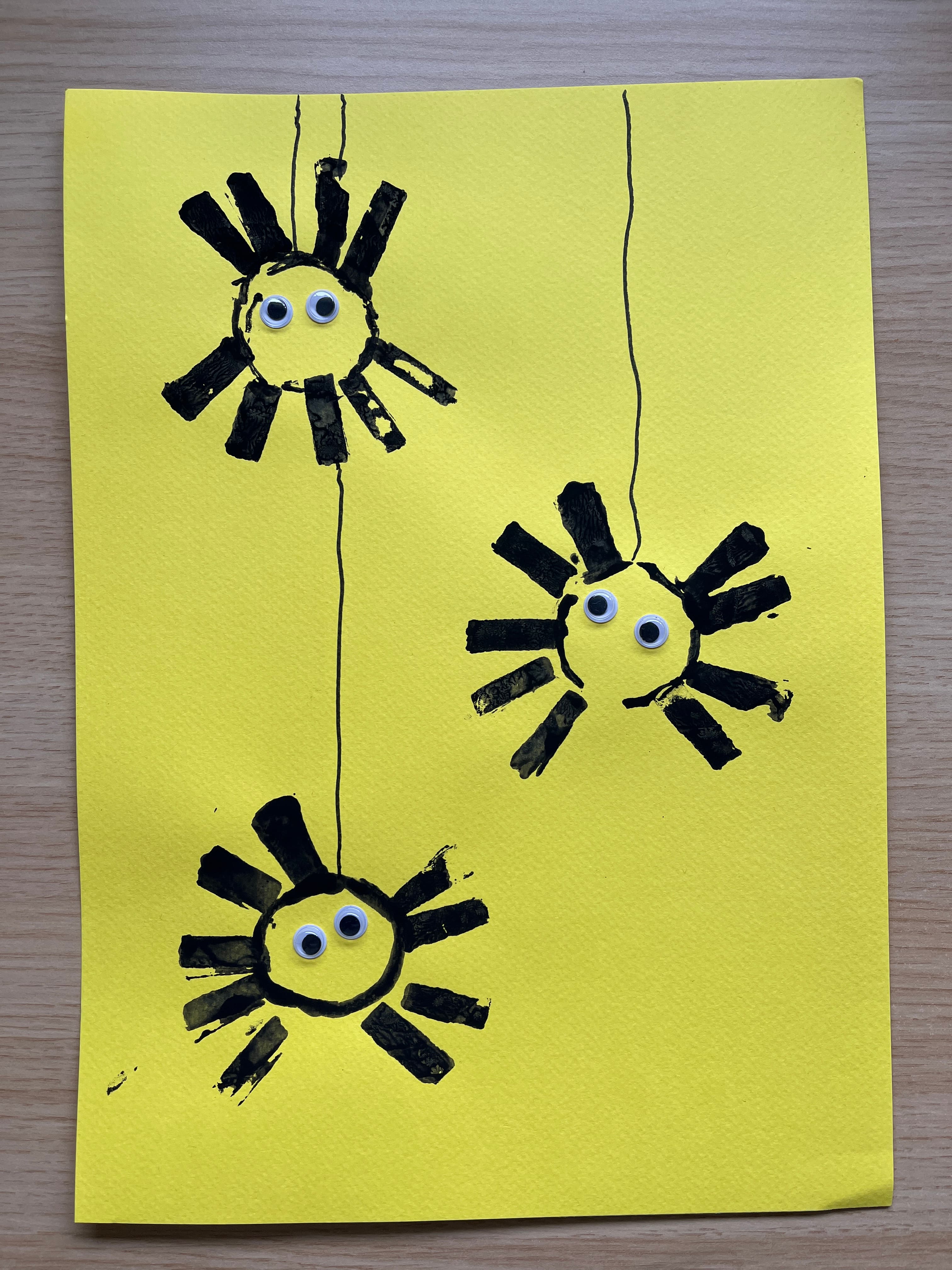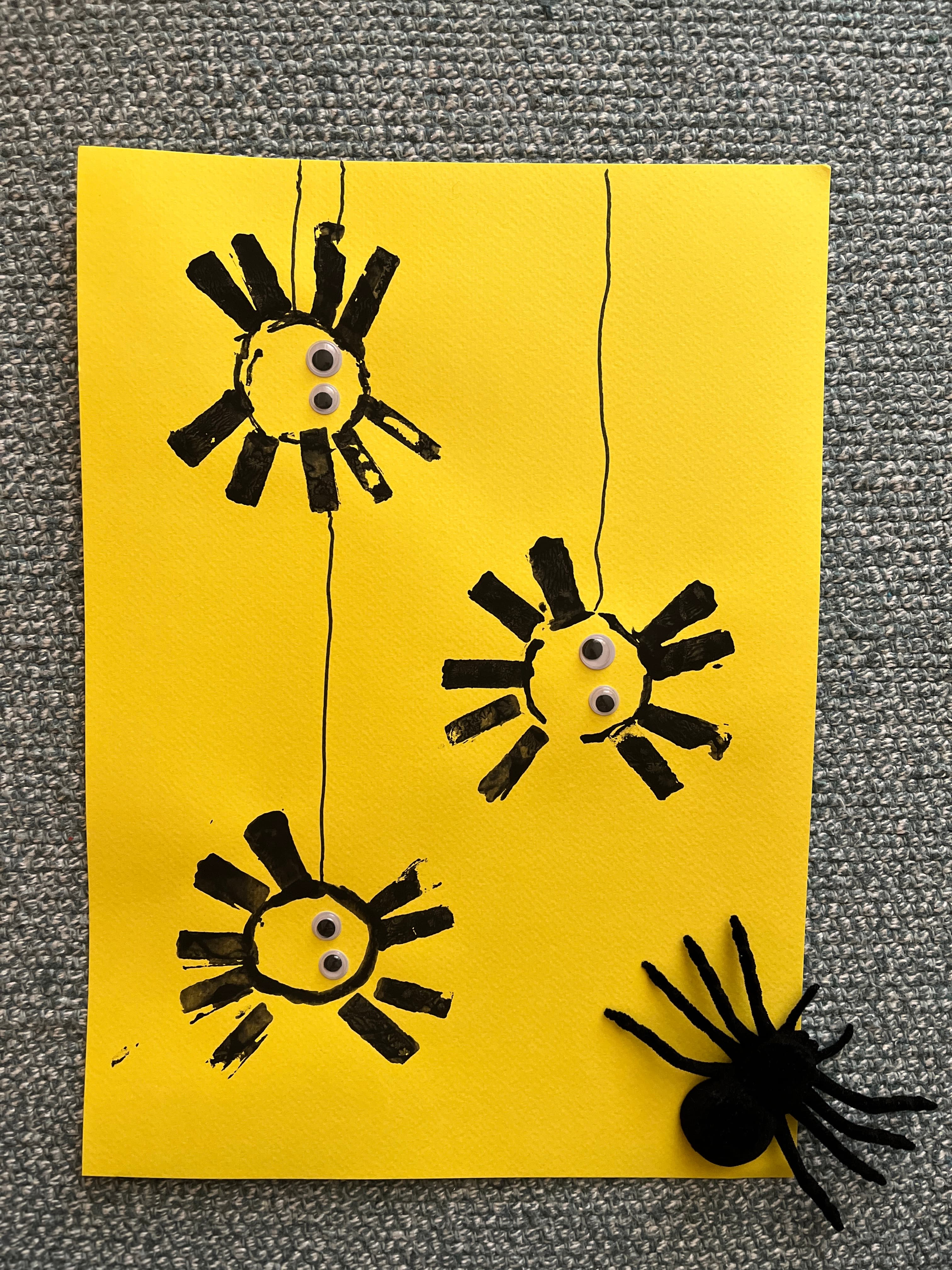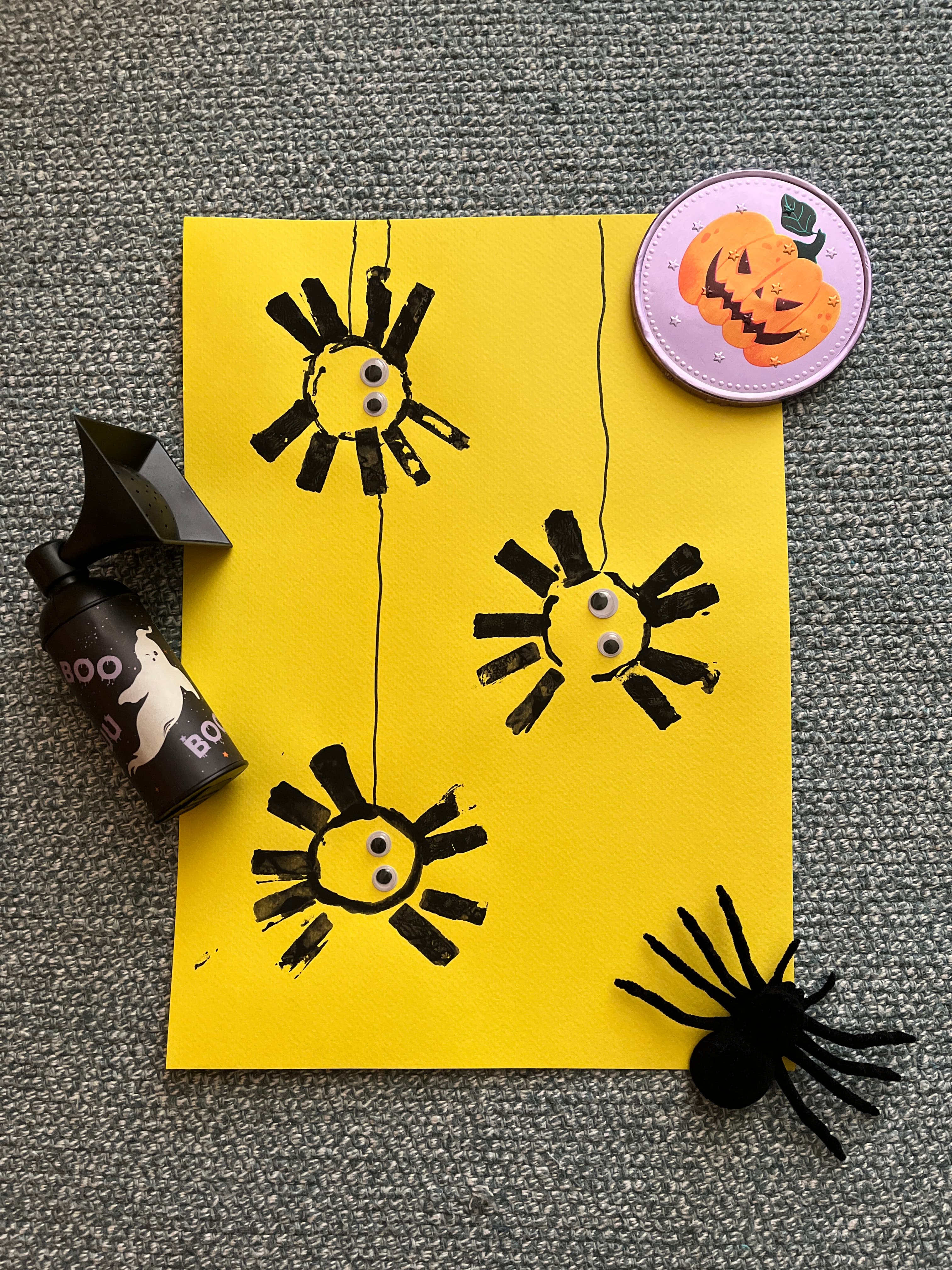
The "spider stamp" is a fun Halloween craft for preschool children that nurtures fine motor skills and imagination — using materials we already have at home!
What You'll Need
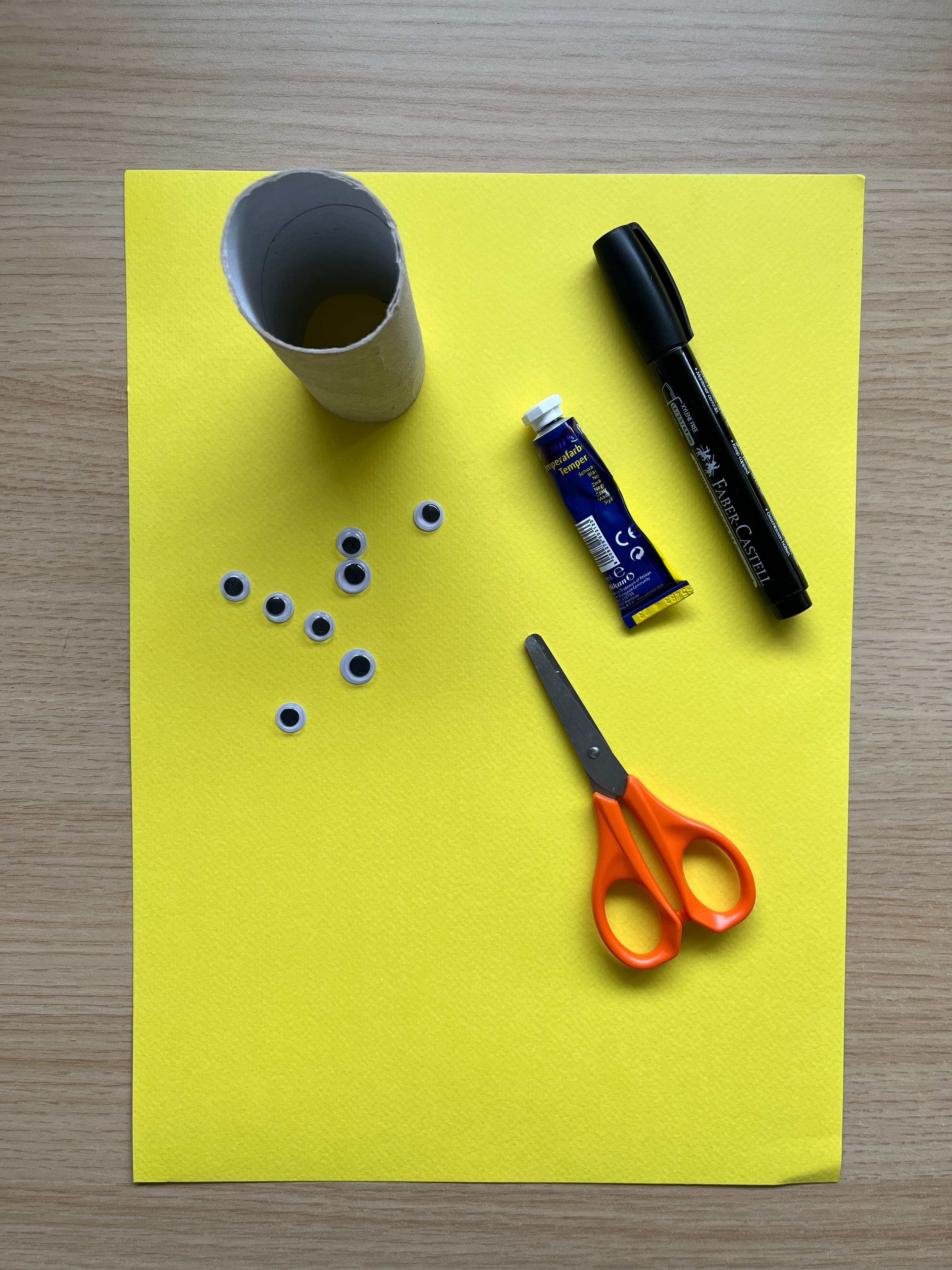
- Toilet paper roll
- Black paint (tempera or acrylic)
- Paintbrush
- Paper or card stock for printing
- Craft eyes (or small paper circles)
- Glue (stick or liquid)
- Children's scissors (for the vertical strips)
Step-by-Step Instructions
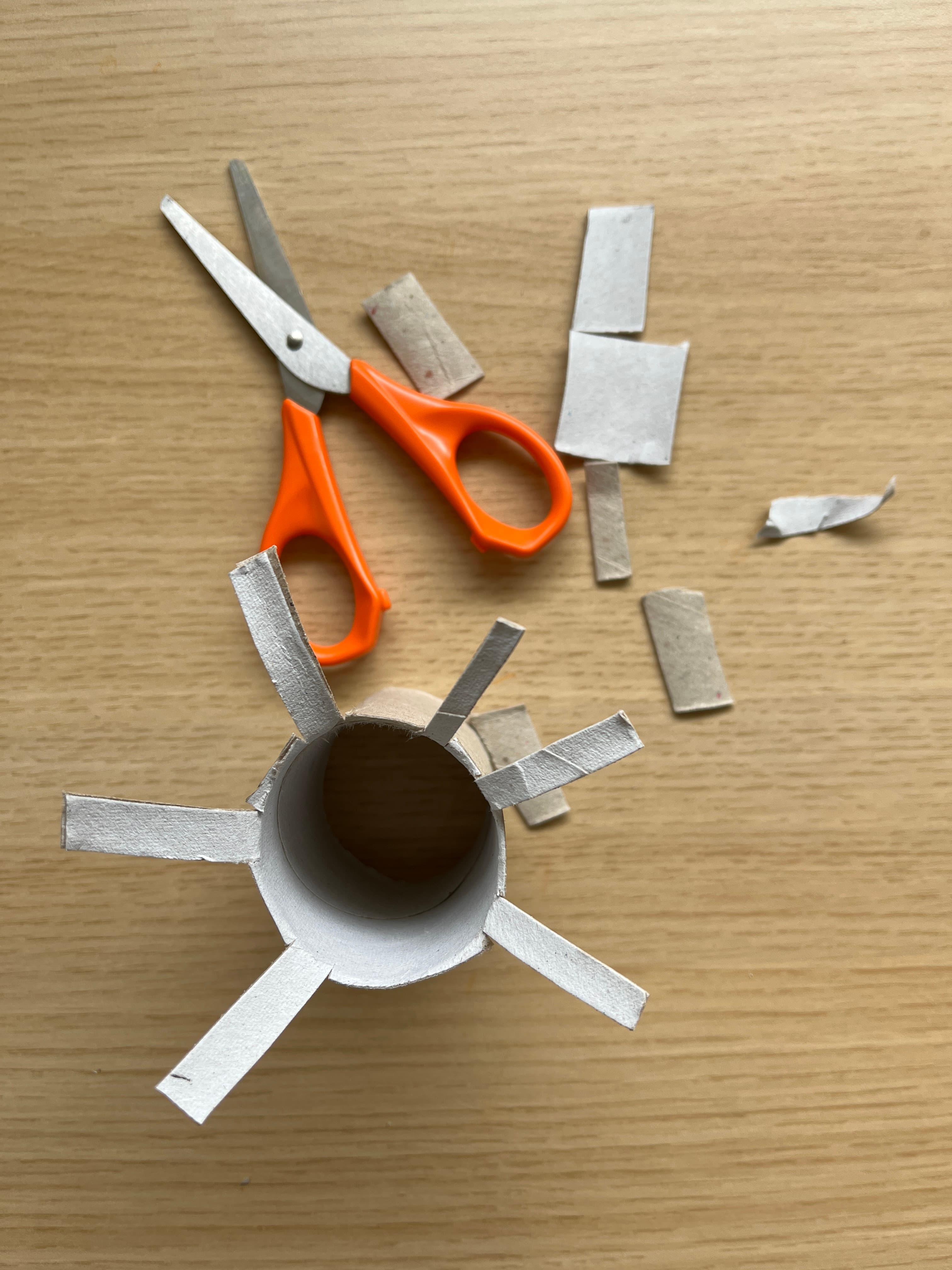
Step 1 — Make the legs With an adult's help, cut the bottom of the roll vertically into thin strips of 1–2 cm all the way around, creating a "sunflower" of strips that will act as legs. Press the strips outwards so they splay open.
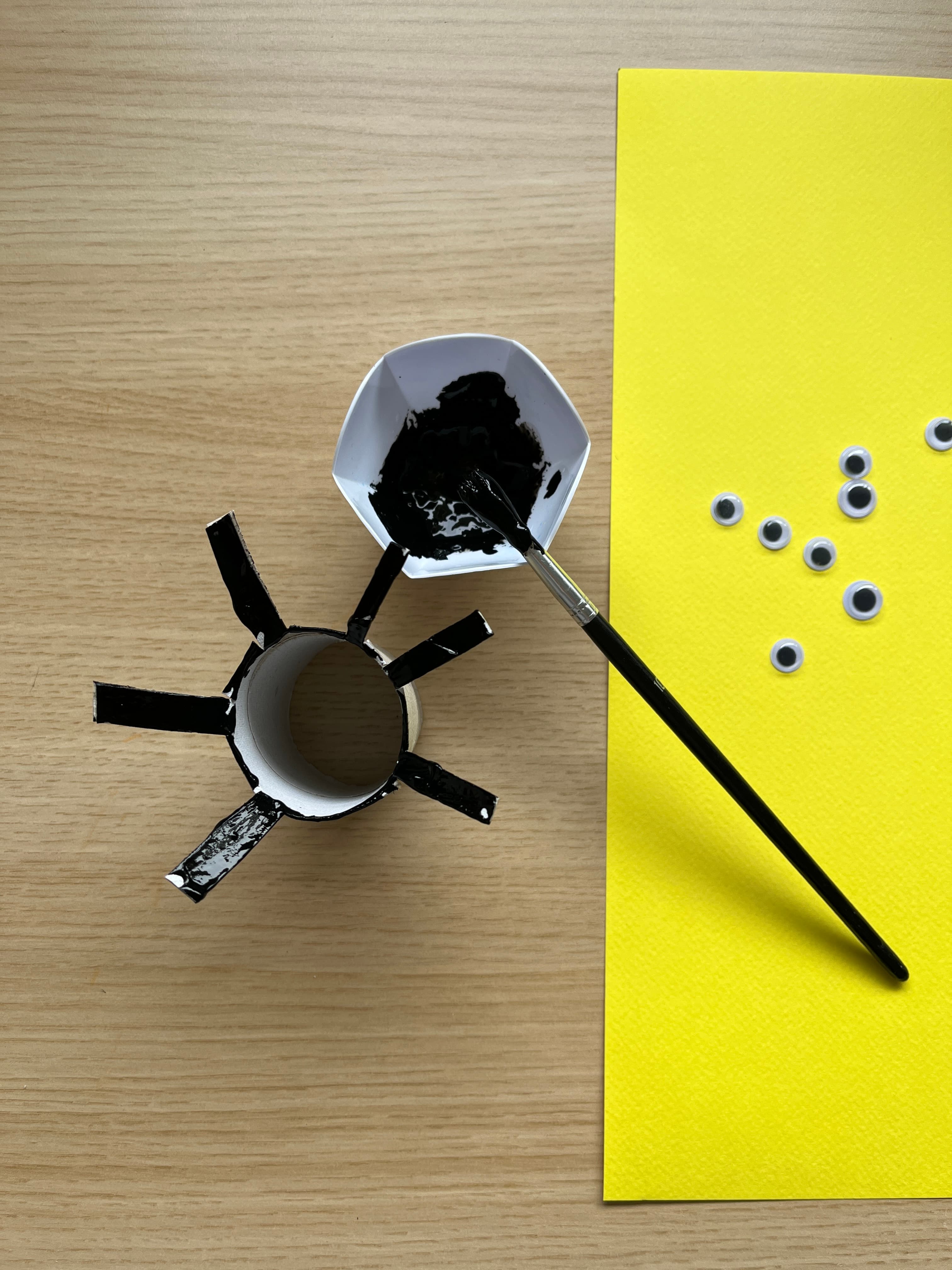
Step 2 — Stamp the legs Color the tips of the strips evenly into the black paint and press firmly onto the paper to create an eight-legged print.
Step 3 — Add the body Use the upper, cylindrical part of the roll — dip it lightly into the paint and stamp a circle in the centre of the legs. Alternatively, fill the centre with a paintbrush or sponge.
Step 4 — Add the eyes Once the paint has dried, glue on the craft eyes — or small circles cut from paper. The little spider is coming to life!
Step 5 — Add details (optional) Add a smile or a web using white paint or a marker. For an even more striking result, try glitter, eyes of different sizes, or a background web made with white crayon and watercolour paints!
⚠️ Safety note: Always supervise closely, use safety scissors, protect the work surface with newspaper, and wash hands after painting.
Educational Benefits
Fine motor skills and pressure control: Dipping and pressing the stamp with steady, controlled pressure exercises grip, finger strength and movement control — excellent preparation for writing.
Hand-eye coordination: Placing the spider's body precisely in the centre of the legs develops visual-motor perception and spatial orientation.
Early mathematical concepts: Counting legs ("how many legs does a spider have?"), comparing prints and understanding the concept of "centre" introduce children to mathematics in the most natural way.
Language development: Opportunities for language play — "legs", "centre", "all the way around" — strengthen vocabulary and oral language skills throughout the activity.
Recycling and creative thinking: A toilet paper roll becomes an art tool — children learn to see creative possibilities in everyday objects.