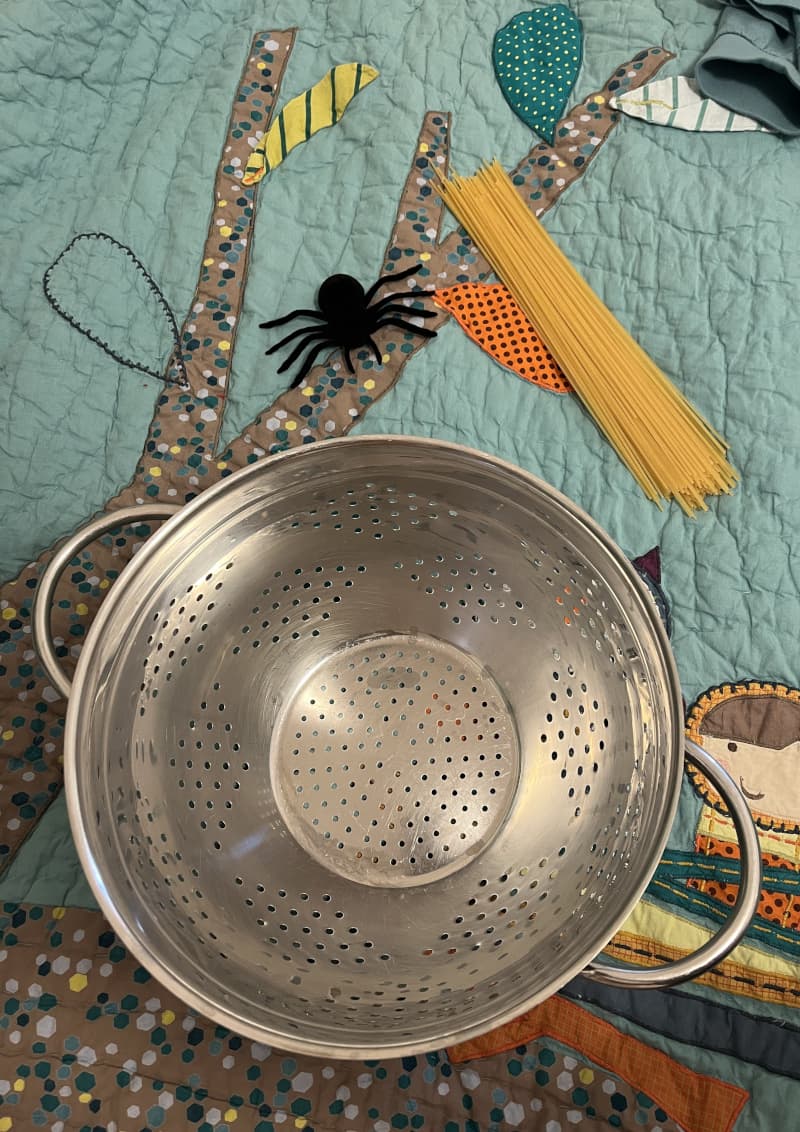
This activity is a simple, affordable and highly effective fine motor exercise for children aged 2–6. All you need is a colander, a few pieces of raw spaghetti and a little spider — and you have a spooky Halloween web that children will absolutely love!
What You'll Need
- 1 metal or plastic colander with small holes
- Thin, raw spaghetti
- A spider
Step-by-Step Instructions
Step 1 — Prepare the colander This will be the base of the web!
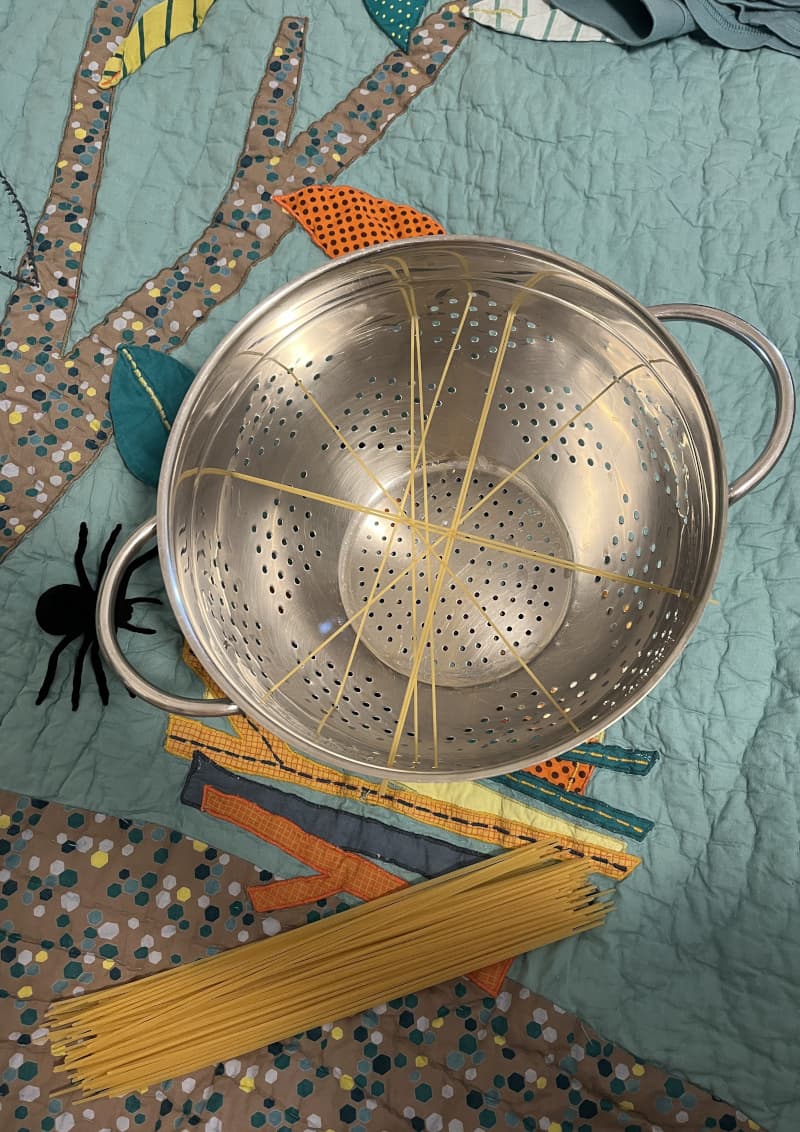
Step 2 — Build the web Holding a piece of spaghetti with a tripod grip, the child carefully inserts it into one of the holes. Repeating this movement gradually builds the web!
Step 3 — Add challenges With younger children (aged 2–3), focus on the "in and out" movement using a colander with larger holes. With older children (aged 4–6), you can introduce challenges — how many pieces of spaghetti can we fit in one minute?
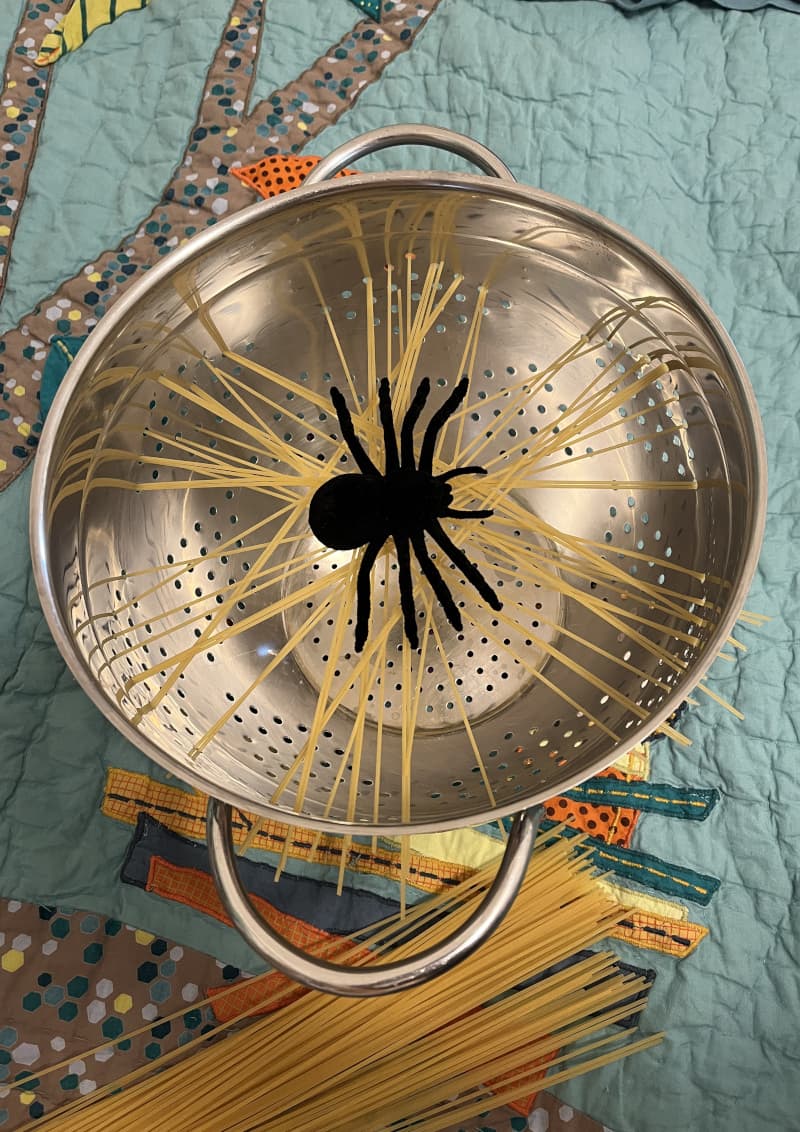
Step 4 — Add the spider! To enrich the play, place the toy spider on top of the completed web — the spider's web is ready!
Step 5 — Talk, count, tell stories! Throughout the activity, talk about the movements ("slowly", "straight or curved"), count out loud together, and make up little stories around the child's creation — all of which support language development!
⚠️ Safety note: Always supervise closely, use raw spaghetti only, avoid colanders with sharp edges, and collect any broken pieces at the end.
Happy playing!
Educational Benefits
Fine motor skills and tripod grip: Inserting the spaghetti through the holes exercises finger strength and the tripod grip — the exact same grip the child uses when holding a pencil to write!
Hand-eye coordination: Precisely placing the spaghetti into the correct hole develops visual-motor coordination — a key skill for writing and many everyday activities.
Motor planning: Each piece of spaghetti requires anticipation and controlled movement — a higher cognitive function developed through simple play.
Concentration and patience: The activity requires focus and persistence — skills that are nurtured without pressure, through a game children genuinely enjoy.
Early mathematical concepts: Counting, comparing quantities and timing introduce children to mathematics in the most natural way.
Language development: Talking about the movements, counting aloud and telling little stories strengthen vocabulary and oral language skills.
Have fun! 🧒🍝✨